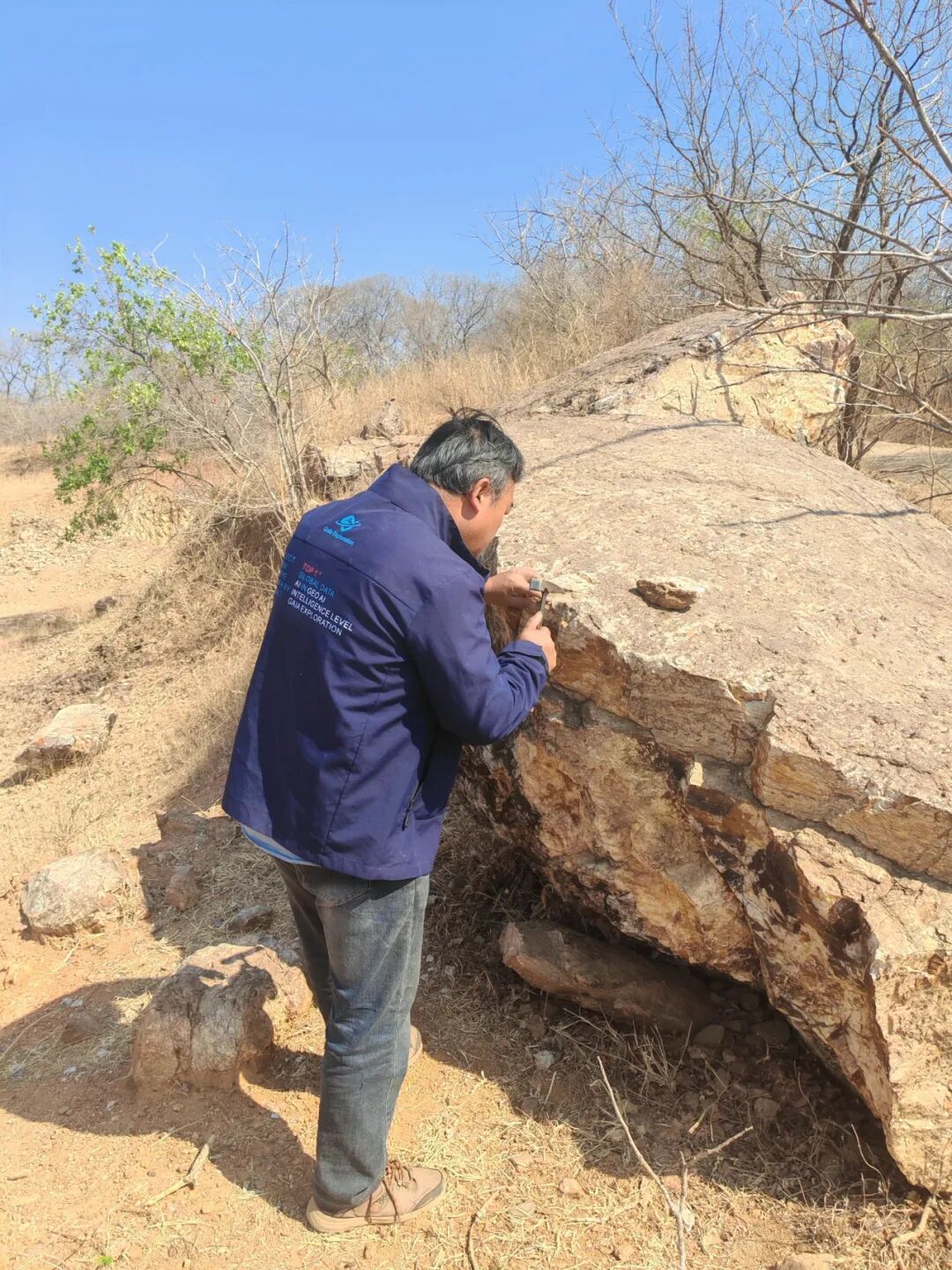
Lithium capital expenditure contracted by about 40%, nickel exploration budgets fell by nearly 45%, while copper spending grew by 8%. Put those three figures in one table and the conclusion is not that critical-mineral investment is retreating. Capital is leaving projects that cannot prove they will survive the next price cycle and concentrating in commodities with the clearest supply timing and the most diversified demand. This is screening, not withdrawal.
For Africa, the constraint has never simply been whether the world will still need lithium and cobalt. It is how much of Africa's stated reserves can pass the filter of capital discipline and become an underwritable cash-flow model.
01Demand and Investment Diverge
Global battery demand grew by more than one third in 2025 while capital expenditure fell. The contrast looks contradictory, but the logic becomes clear when the categories are separated.
Cuts to lithium and nickel capital expenditure did not result from lower demand forecasts. Goldman Sachs expected at the end of 2025 that lithium prices would fall another 23% by the end of 2026, with aluminium down 18% and iron ore 17%, while copper alone would “remain firm.” When prices cannot cover the full cost of marginal projects, delaying expansion and cutting exploration is capital discipline, not a rejection of electrification.
The real question is the lag embedded in exploration spending. Exploration leads mine development by two to five years. Budgets cut today do not remove supply in 2026; they create a hole in the 2029–2031 pipeline. The IEA found for major mines commissioned in 2010–2019 that discovery to first production averaged more than 16 years, with exploration and feasibility taking over 12 years. Current lithium surplus and a possible post-2028 supply deficit are therefore not conflicting views but different time slices of one capital cycle. What has weakened is not long-term lithium demand but the thickness of the pipeline available to meet it.
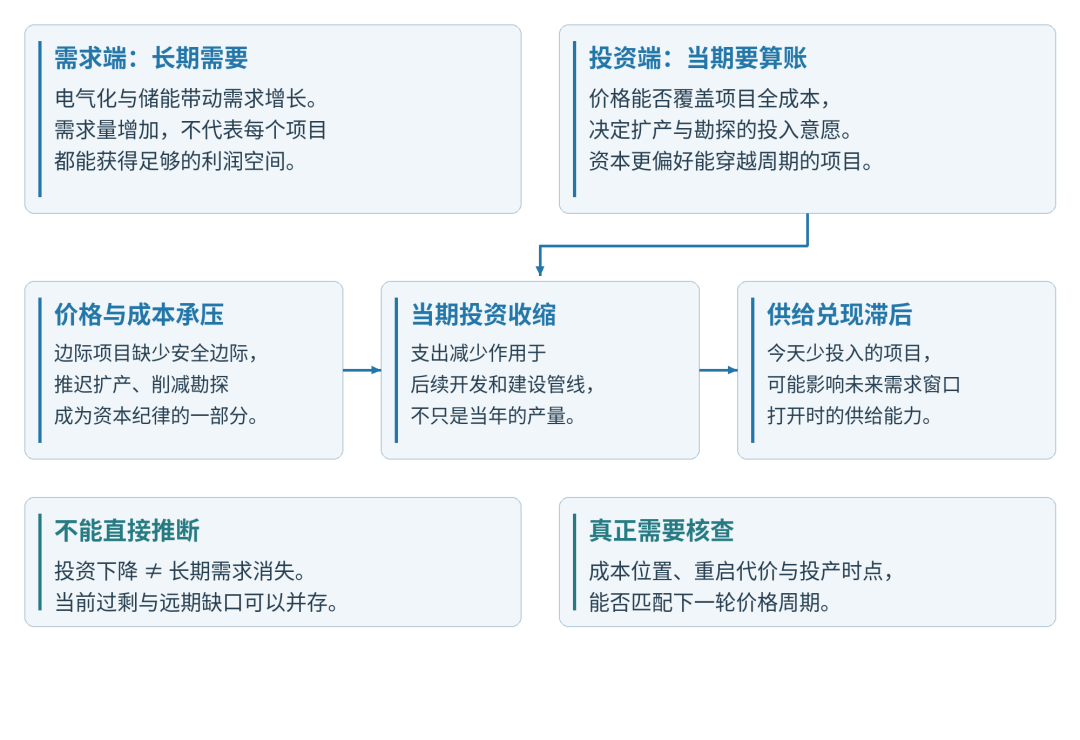
Pipeline depth is exactly what capital discipline prices. If a commodity is oversupplied today and short tomorrow, but closure and restart costs between those states are high, capital will wait rather than prepay at the bottom of the cycle. Waiting is itself a pricing decision.
02Why Copper Grows Against the Trend
The usual explanation for an 8% increase in copper capital expenditure is “electrification demand.” That is too cheap an answer. Copper differs from battery metals because of three structural conditions, not simply a higher demand-growth rate.
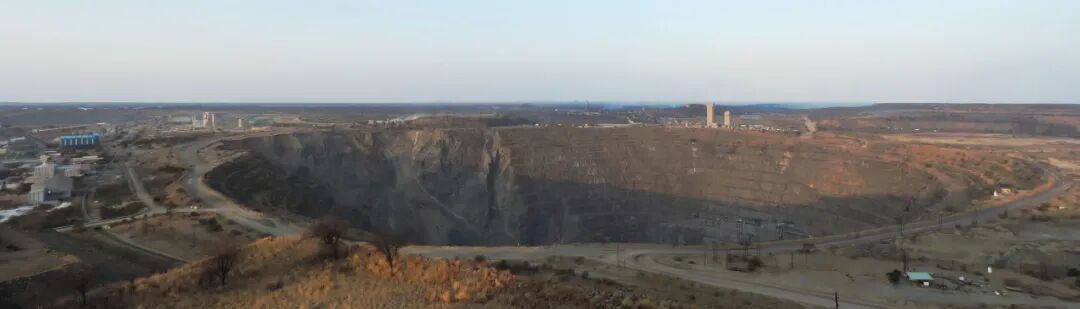
First, copper supply losses are occurring now, not merely forecast for the future. In the first half of 2026, output from the world's 20 largest copper producers fell 2.5% year on year. BHP, Codelco and Freeport-McMoRan together lost 215,000 tonnes because of declining grades and operating interruptions at El Teniente in Chile and Grasberg in Indonesia. One disruption at Grasberg removed about 500,000 tonnes of material from the market. This is not a story about a possible future shortage; it is supply loss already reshaping the current balance.
Second, copper demand is diversified enough to narrow the confidence interval around price forecasts. Battery-metal demand is highly tied to rapidly changing battery chemistries. Copper demand spans power grids, construction, industrial equipment and transport electrification. Even with a conservative assumption for AI data centers, underlying industrial activity and broader electrification provide a floor. For capital allocators, diversified demand makes a project more underwritable—not because growth is necessarily faster, but because cash-flow variance is lower.
Third, the timing of the deficit has entered a priceable horizon. BloombergNEF estimates that avoiding a copper shortfall requires US$332 billion of new-mine investment. The deficit begins in 2028 and expands to 20 million tonnes by 2050, equal to 44% of global demand then, while a new mine still averages 17 years from investment to production. Goldman Sachs raised its forecast for the 2026 refined-copper deficit outside the United States more than tenfold, from 60,000 to 640,000 tonnes.
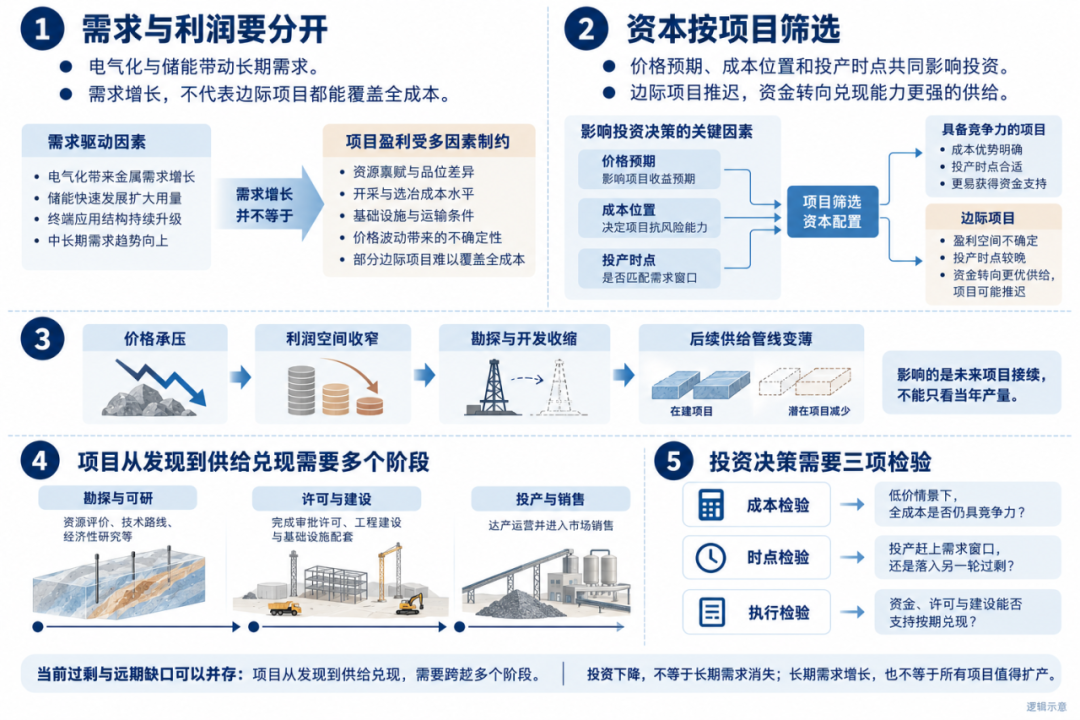
A brake is necessary here. BNEF also says that nine of ten critical energy-transition metals have enough long-term supply potential to meet electrification demand through 2050; copper is the exception. Its scarcity is a structural exception, not the normal state of critical minerals. Extrapolating copper's growth into a broad “critical-mineral investment recovery” misreads the divergence. Capital is concentrating in the commodity with the strongest supply credibility, not returning to the entire sector.
03Battery Metals Diverge Again
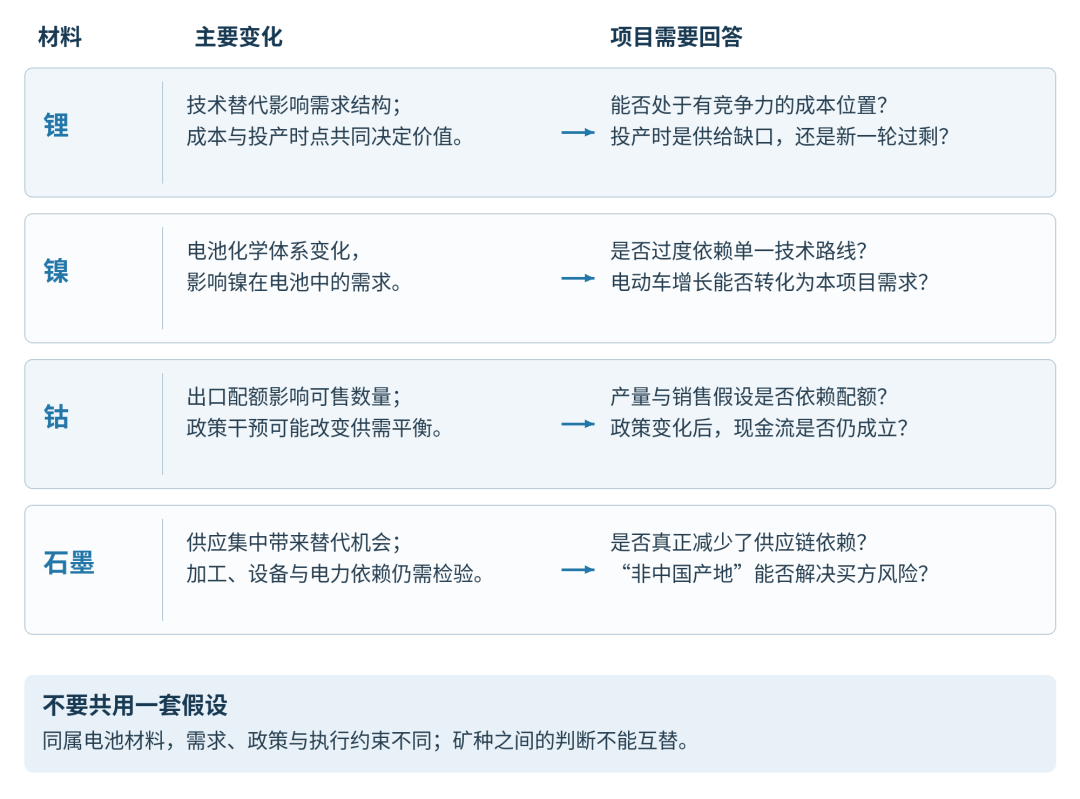
Lithium, nickel and cobalt were grouped as “battery materials” whose spending fell about 20%, but that grouping hides the most consequential differences within it.
LFP batteries held more than 40% of the global electric-vehicle battery market in 2025 and eliminate cobalt and nickel demand entirely. Sodium-ion cathode material costs 30% to 50% less than LFP, and sodium is roughly 1,000 times as abundant in the Earth's crust as lithium. Sodium-battery shipments are expected to triple to about 10 GWh in 2026. CATL has invested roughly US$1.45 billion in sodium-ion technology. The economic meaning is that some stationary-storage demand is being removed permanently from lithium's potential demand pool.
This is not simply a cyclical fall in lithium price. Technology substitution is reshaping the demand function from below. A lithium project's investment value no longer depends on how much lithium the world will need in aggregate, but on where the project sits on the cost curve and whether its commissioning date falls into a hole in the supply pipeline or another surplus.
Cobalt follows another path. The Democratic Republic of the Congo set a 2026 export quota of 96,600 tonnes, below recent production, potentially widening the forecast cobalt deficit for 2026 from 16,000 to 80,000 tonnes. The problem is not weak demand but policy-created scarcity on the supply side. That supports prices but raises a different financeability issue: supply “credibility” now depends on a sovereign export-quota decision rather than geology or engineering. A cobalt project whose financial model assumes entirely that quotas remain in place is underwriting a policy choice, not only a mine.
Graphite reveals a less visible dimension: supply concentration can cause capital to leave, not merely prices to rise. China controls more than 90% of battery-grade graphite processing and expanded export controls on graphite anode materials in October 2025. For African graphite projects this is both opportunity and trap. Diversification creates strategic replacement demand, but a project claiming to replace Chinese supply does not solve the buyer's priced risk if its processing route, equipment ecosystem and power-cost structure remain dependent on China. Buyers seek not merely non-Chinese origin but non-Chinese dependency. The gap between the two is the project's execution discount.
The Distance from Resource to Asset
A July 2026 McKinsey statistic belongs on the wall of every African mining-policy discussion: Africa holds more than one quarter of known global critical-mineral reserves, yet fewer than 10% of projects in its critical-mineral pipeline have secured financing or reached feasibility and construction. Africa attracts about US$1.2 billion of exploration spending a year, roughly half the annual amount received by Australia or Canada individually.
“Policy risk” alone does not explain the break. It consists of interlocking execution constraints amplified by capital discipline. When battery-metal prices provide no margin of safety for marginal projects, a higher discount rate on any execution constraint can push the project outside the financeable boundary. In a rising market, profits absorb the execution discount; in a falling market, it becomes a veto.
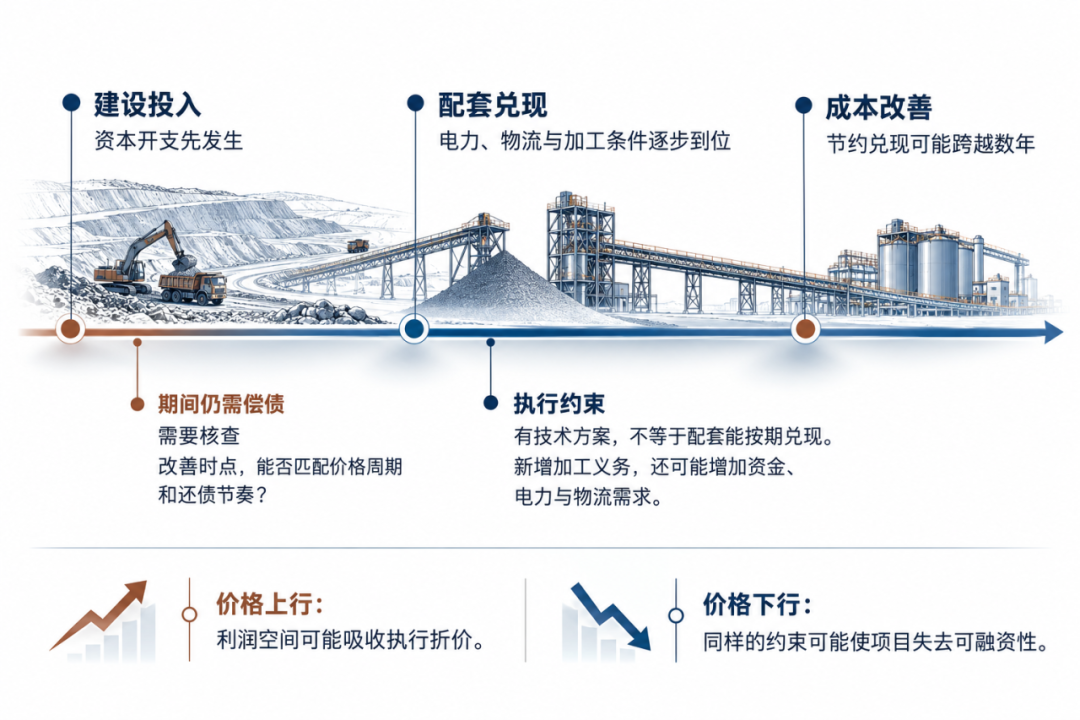
Power is especially useful analytically because it is both technically solvable and institutionally difficult. Diesel generation at remote African mines often costs US$0.15–0.50/kWh, while solar plus storage can already deliver US$0.06–0.20/kWh in many settings. Technically, power need not be a barrier. Institutionally, reliable generation and transmission are public goods that one project cannot solve. Allied Gold expects its hybrid-power solution at Mali's Sadiola mine eventually to cut all-in sustaining costs by US$150–200 per ounce, but savings are “limited” in 2026, accelerate in 2027 when solar and storage enter service, and reach full effect only when medium-speed units arrive in mid-2028. It is a classic constraint of capital expenditure now and cost savings later. For a mid-sized developer with a thin balance sheet during weak lithium prices, that timing mismatch is a hard screen.
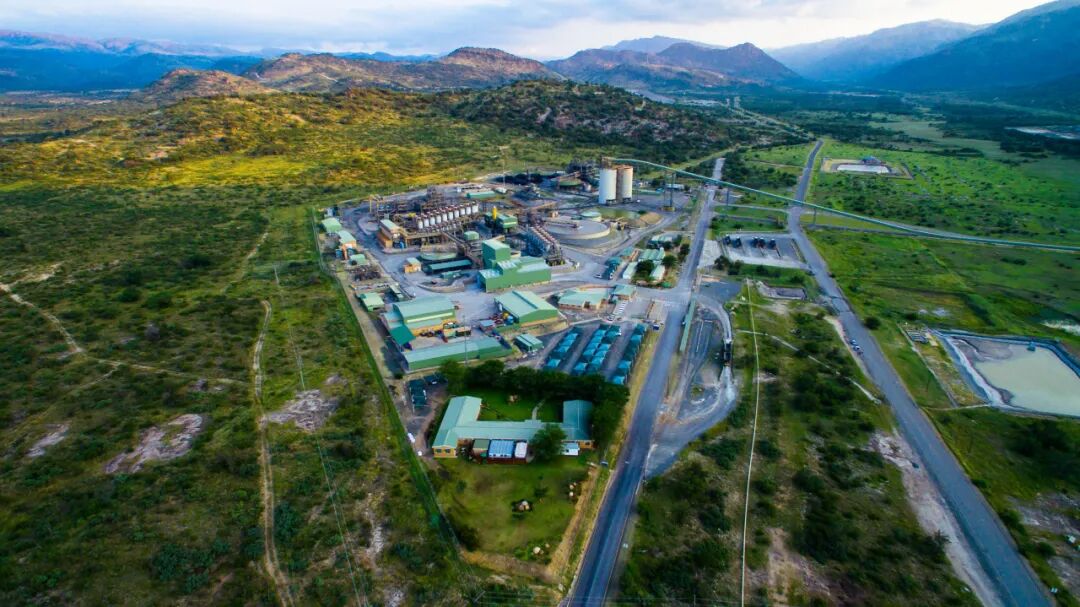
More concerning, the tightening direction of African resource policy compounds these constraints instead of offsetting them. Zambia plans to stop exports of unprocessed ore by 2030; Guinea aims to operate five alumina refineries by 2030; Botswana raised the mandatory free government interest in strategic minerals from 15% to 25% and requires priority for domestic processing. The development logic is defensible. But local processing requires more capital, more reliable power and a more complex logistics chain—the three weakest links in much of Africa's project pipeline. Resource nationalism does not automatically drive capital away. When combined with an execution deficit, however, it pushes risk-adjusted returns below the financeability threshold. Policy intent may be right while timing is wrong, and capital discipline does not pay a premium for good intentions.
05Financing Shifts toward Control of Flows
In response to this execution discount, African mining finance is changing structurally: the focus of capital allocation is moving from ownership to control of material flows.
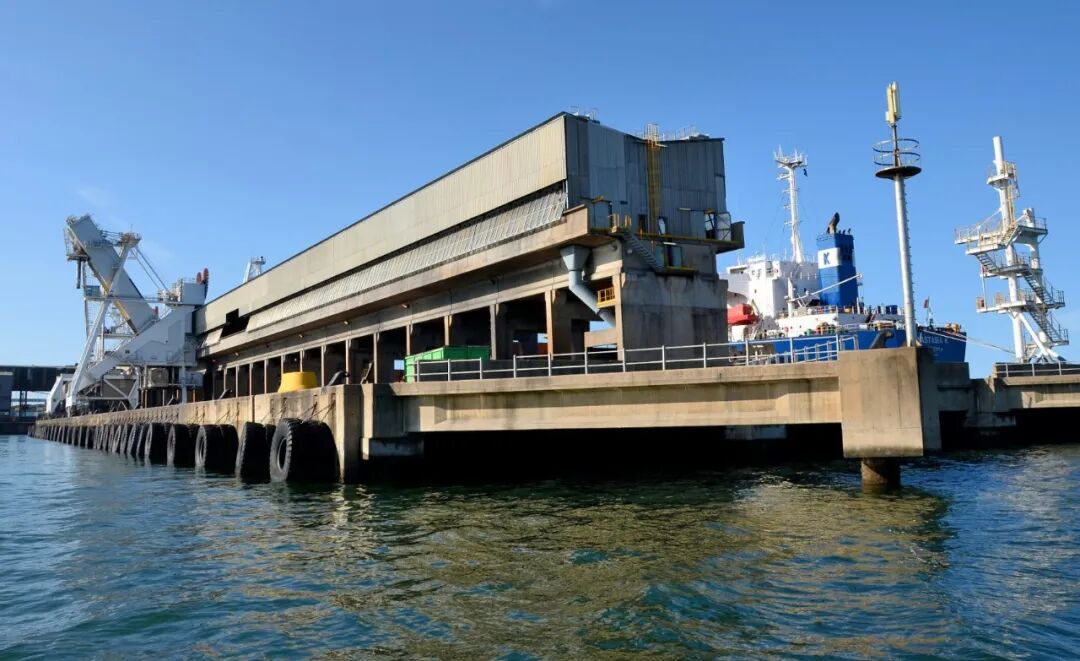
Long-term offtake, marketing rights, structured prepayments and privileged routes are moving from ancillary deal terms to the center of the transaction. The commercial logic runs both ways. Buyers gain supply certainty and origin traceability; projects gain binding offtake and prepayment that improve financeability, because lenders prefer contract-backed cash flow and clear sales routes. Lithium Africa's Springbok project in South Africa has received a proposal for an offtake-linked prepayment facility covering 100% of spodumene concentrate during the first three years of production. More broadly, African mining finance is becoming a multilayer capital stack combining development finance, commercial debt, royalty or streaming capital, offtake-linked funding and sponsor equity. Financeability is no longer a binary state reached after feasibility; it is engineered by allocating risk deliberately among institutions with different mandates and time horizons.
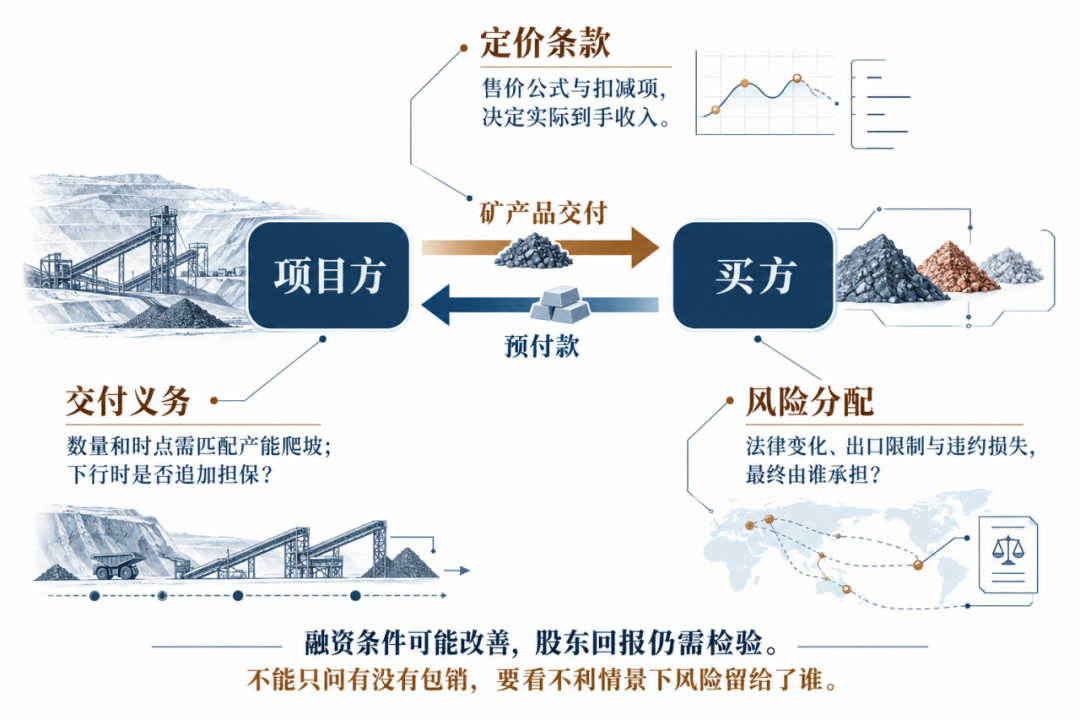
A new risk must be measured precisely. Pricing formulas and deduction transparency in structured offtake and prepayment, strict delivery obligations, and the allocation of change-in-law and export-restriction risk determine whether these instruments relieve a financing constraint or transfer project value from equity holders to counterparties. An offtake that appears to “solve financing” can become a financial burden when commodity prices fall if its price terms are excessively sensitive to the current lithium cycle or the project bears all export-restriction risk. Investment-bank-grade diligence does not stop at whether an offtake exists; it asks who bears the downside under the price-realization mechanism.
How a Project Passes the Screen
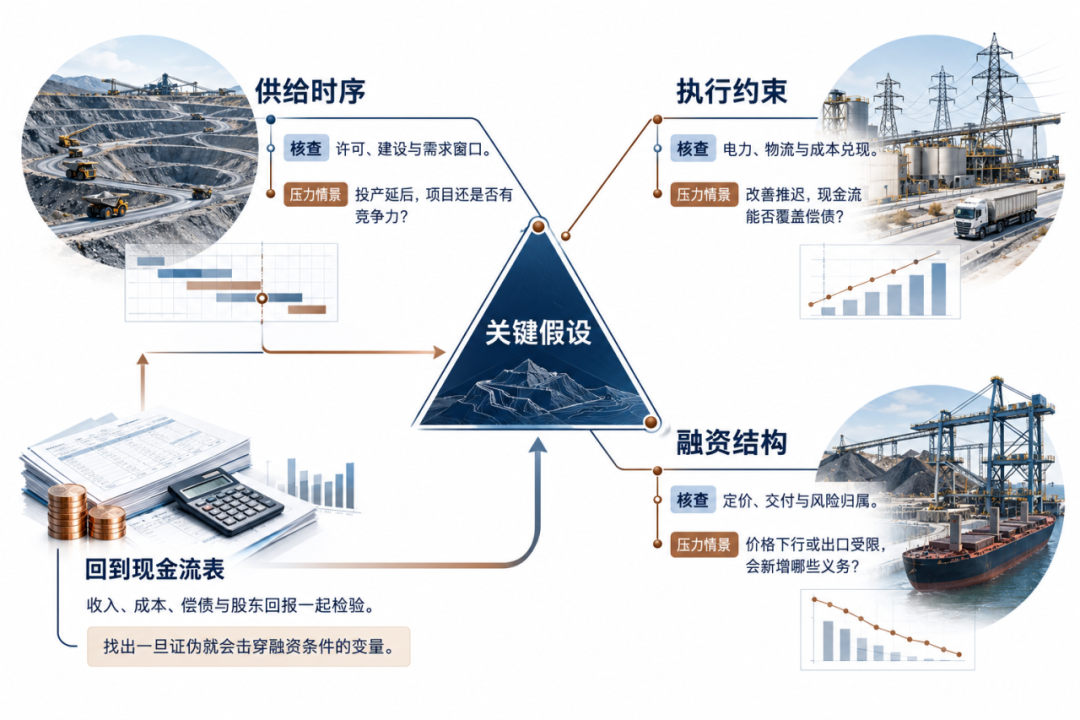
An actionable investment framework should not begin with a global demand forecast; its confidence interval is wide enough to accommodate nearly any narrative. The discriminating question is: which execution variable in this project, if falsified, would push risk-adjusted return below the threshold of capital discipline?
The analysis must work simultaneously at three levels, and one commodity or project cannot substitute for another.
First level: credibility of supply timing. Lithium's issue is not whether enough resource exists underground, but how many projects survive today's capital cuts and finish construction when the 2028–2030 demand window opens. Copper's issue is not whether demand grows, but how much new capacity clears permitting and construction before the 2028 deficit expands. A lithium project's value depends on its cost position and whether commissioning falls into a pipeline gap rather than another surplus.
Second level: time-varying discount of execution constraints. Power, logistics, permitting and community relations are not parallel risk items; they impose discounts on project cash flow that change through time. A feasibility study may show competitive economics, but if the power solution reaches design cost only in year three while the price assumption reflects year one, net present value may reverse under capital discipline. The key is not whether constraints exist, but whether their improvement schedule is compatible with the price cycle and debt repayment curve.
Third level: direction of risk allocation in the financing structure. The extent to which offtake and prepayment move price risk, change-in-law risk and export-restriction risk from the project to the counterparty determines actual equity returns under different scenarios. A prepayment that looks attractive in an upswing can resemble expensive senior debt if it triggers additional collateral or accelerated delivery in a downturn.
Conclusion
A Goldman Sachs observation about critical minerals in 2026 provides an apt ending: strategic advantage is moving from “who controls the mine” to “who controls the system from mine to market.” Africa's challenge is not a lack of minerals. Every link that converts geology into industrial capacity demands a premium from capital. Only projects able to identify the execution variable that can break underwriting qualify for the next discussion. Projects that cannot answer remain rocks underground, however large their stated reserves.
For African policymakers and project sponsors, the decision-weighted question is not how much lithium, copper or cobalt the energy transition needs. It is which assumption in this project would overturn the entire cash-flow model if reality disproved it. For some projects, it is the timing of power-cost delivery; for others, the reduction of saleable output by export quotas or local-processing obligations. For lithium, it is survival on the cost curve through the next price cycle; for copper, the execution speed required to reach production before the deficit materializes. The distance between “Africa has resources” and “Africa has investable assets” is not a demand narrative. It is execution evidence.