China–Tajikistan Cooperation in AI-Powered Exploration—From Resource Potential to Intelligent Exploration
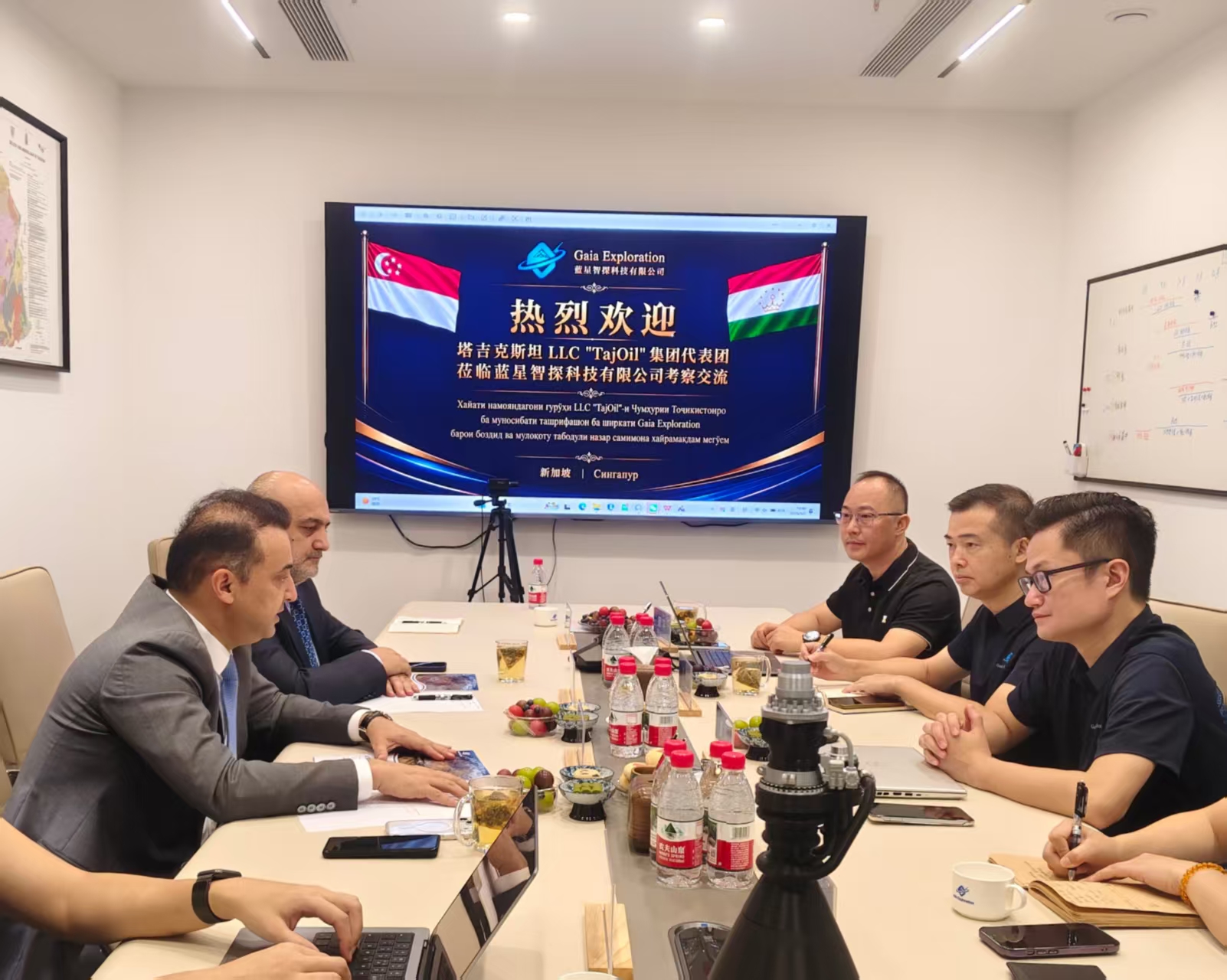
A delegation from Tajikistan recently visited GAIA Exploration for in-depth discussions on Tajikistan’s mineral-resource potential, AI-powered exploration technology and future directions for mining cooperation. Participants from Tajikistan included government and industry representatives, LLC “TajOil” Group Chairman Javokhirlal M. and Property Manager Firuz S. GAIA Exploration was represented by CEO Huang Heng, CFO Wu Jian and members of the company’s management team.
The exchange was not limited to one mineral licence or a single project. It extended to resource-potential assessment at a broader regional scale and to future opportunities involving priority commodities such as gold, copper and antimony. For GAIA Exploration, the meeting also showed that AI-powered mineral exploration is moving beyond project-level applications toward regional resource assessment and international mining cooperation. Rather than merely refining the understanding of a known orebody, large-scale exploration must first answer another question: across an extensive area and complex datasets, how can teams determine more quickly where the next stage of exploration resources should be deployed first?
Resource Demand During Industrialisation
During the exchange, the Tajik side explained that Tajikistan has relatively abundant water and mineral resources and is actively advancing energy independence and industrial development. Mining is regarded as an important support for future industrial upgrading. As industrialisation accelerates, local demand for mineral exploration is also moving from the development of individual mining areas toward more systematic assessment of resource potential.
This means that the questions to be answered are no longer limited to whether mineralisation exists underground. They also include which regions deserve priority exploration, which commodities have greater strategic and economic value, and where limited exploration budgets should be allocated first. Once the scale of assessment expands, regional geology, remote sensing, geophysics, geochemistry, historical mineral occurrences and existing exploration records must be reconsidered within one framework. Traditional manual review of maps and reports faces limits in efficiency and information integration when applied to large areas and multiple data sources.
This is precisely where AI can contribute to mineral-exploration decisions. GAIA Exploration does not seek to replace geological judgment with a model. Its purpose is to help teams identify, within complex data, areas that warrant further verification and to establish a more focused starting point for subsequent fieldwork.
From Individual Mining Areas to Regional Screening
During the meeting, the parties focused on the possibility of using AI to assess mineral-resource potential over larger areas. Unlike work at a mature mine, the greatest challenge in greenfield exploration is often not how to interpret a known orebody in greater detail, but how to decide where to begin in a large area where information remains incomplete.
GAIA Exploration’s AI mineral-exploration system emphasises the integrated analysis of regional geology, remote sensing, geochemistry, geophysics and existing exploration information. By examining relationships among multiple sources of evidence, it helps geological teams identify areas that deserve priority verification. The model does not directly announce that an orebody has been discovered. It first narrows the search space and establishes priorities among candidate targets; field mapping, geochemistry, geophysics and drilling then verify them progressively. In other words, the first problem AI addresses is the allocation of resources: within a sufficiently large area, where is the next exploration budget most worth investing?
For a country with substantial resource potential such as Tajikistan, regional screening can first build a more systematic understanding of that potential and then guide subsequent engineering expenditure according to priority. The objective is not to provide a final answer in one step, but to move exploration from broad experimentation toward evidence-based verification.
Gold, Copper and Antimony Become Priority Directions
In selecting commodities, the parties focused their discussion on gold, copper and antimony. Gold and copper have long been major metals for global mining investment. During this exchange, the Tajik side paid particular attention to the strategic value of antimony and expressed the hope of strengthening research and assessment of gold–antimony mineral potential. The discussion therefore moved from the general idea of “AI exploration” to a more specific resource question: how can more targeted regional assessment systems be established for different commodities and mineral systems?
For GAIA Exploration, different commodities cannot simply be judged using the same criteria. Copper, gold and antimony are associated with different deposit types, tectonic settings, magmatic activity, alteration assemblages and geochemical responses. AI analysis must therefore ultimately return to geological principles. GAIA aims to improve the efficiency of information integration, regional comparison and target screening—not to replace professional judgment with a single universal model.
AI-powered exploration must therefore maintain clear boundaries: an anomaly is not an orebody, a target is not a discovery, and model output cannot directly substitute for exploration results. The real value of AI is that it can help teams identify directions worth testing earlier and concentrate limited fieldwork and engineering expenditure in areas supported by stronger evidence.
From Technical Exchange to Long-Term Cooperation
The parties also discussed potential forms of subsequent cooperation and technical validation. GAIA Exploration believes that international mining cooperation cannot be completed through a single model output. It requires a continuous cycle from regional assessment and target screening to field validation, followed by the continuing feedback of new data and revision of earlier judgments. As new geological, geochemical, geophysical and drilling information becomes available, existing hypotheses must continue to be tested. Mature AI-powered exploration should form a closed loop of “data–judgment–validation–feedback.”
This is the form of cooperation GAIA hopes to promote: not replacing conventional geological work with AI, but connecting AI, geological mechanisms and expert experience so that every exploration investment rests on a stronger evidence base. In cross-border mining cooperation, technical capability determines whether cooperation can begin, while long-term trust determines how far it can go.
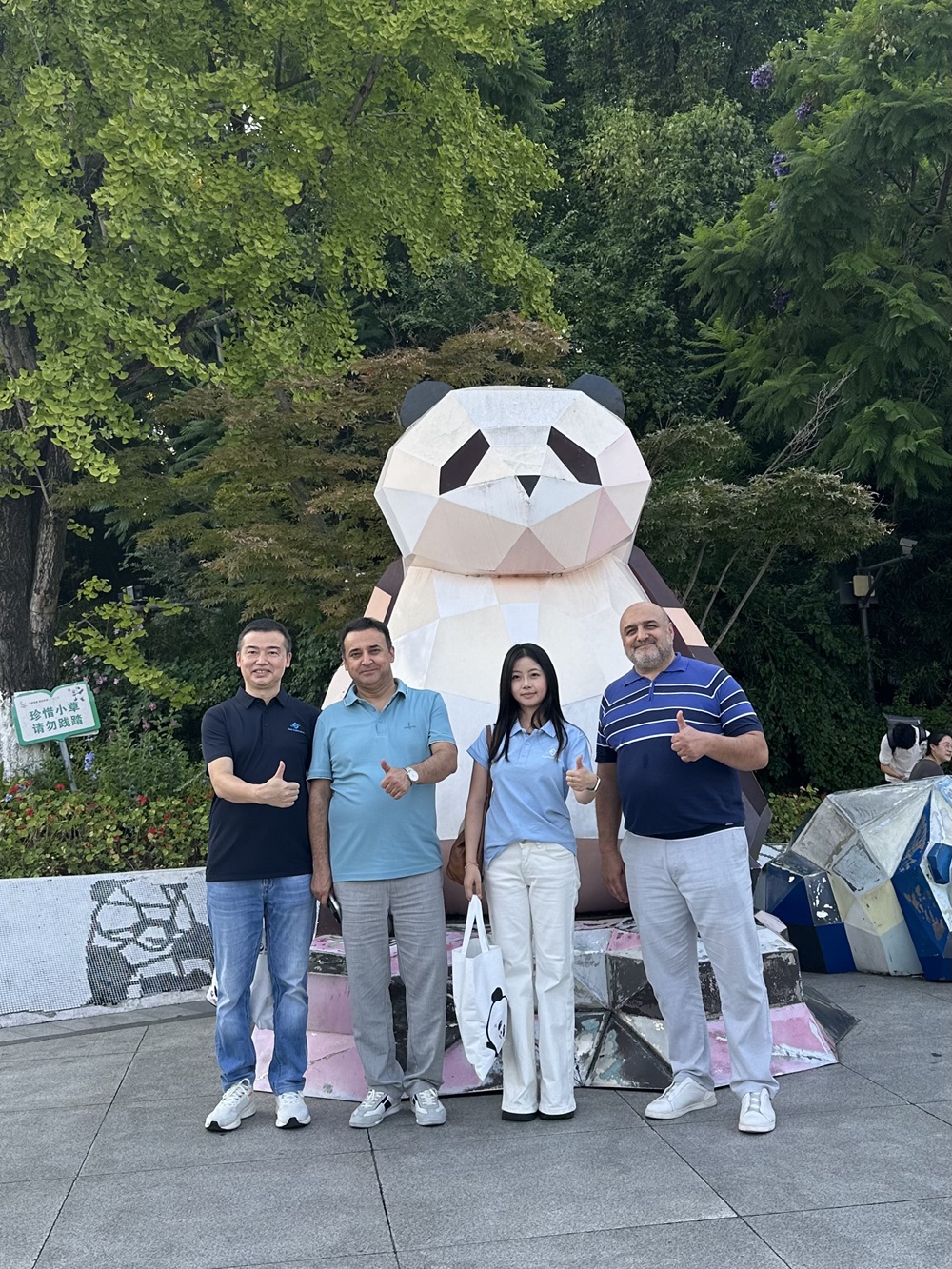
After the formal meeting, GAIA Exploration CFO Wu Jian accompanied the Tajikistan delegation on a visit to the Chengdu Research Base of Giant Panda Breeding. Beyond the professional discussions, the visitors experienced Chengdu’s distinctive urban culture and ecological symbol at close range. The relaxed visit further strengthened communication and mutual understanding and created a more open and friendly atmosphere for future cooperation.
Conclusion: Let AI Connect Resource Potential with Real Exploration
The central topic of the exchange with the Tajikistan delegation was not simply one particular technology. It was a longer-term question: how can new technological approaches improve the efficiency with which subsurface resources are understood and direct limited exploration capital toward the opportunities that genuinely deserve testing?
GAIA Exploration will continue to integrate AI with geological mechanisms, expert knowledge and field validation, providing mining companies, resource investors and international partners with mineral-exploration decision support that is more explainable, traceable and verifiable.
Let AI identify the directions worth testing earlier, and bring every exploration investment closer to real subsurface value.