AI is rebuilding exploration logic so that subsurface resource discovery becomes faster, more transparent and more testable.
The 28th China Mining Conference and Exhibition will be held at the Tianjin Meijiang Convention and Exhibition Center from September 10 to 12, 2026. The event will bring together mining companies, resource project owners, exploration technology providers, investors and partners from across the value chain.
GAIA Exploration will exhibit in N5 Hall at booths 5219 and 5212.
The team will present AI-powered prospectivity analysis, intelligent target prediction, mineral-right technical due diligence, multisource geoscience fusion and 3D target modelling—showing how AI can enter the actual exploration workflow and improve early-stage project judgment.
PART 01
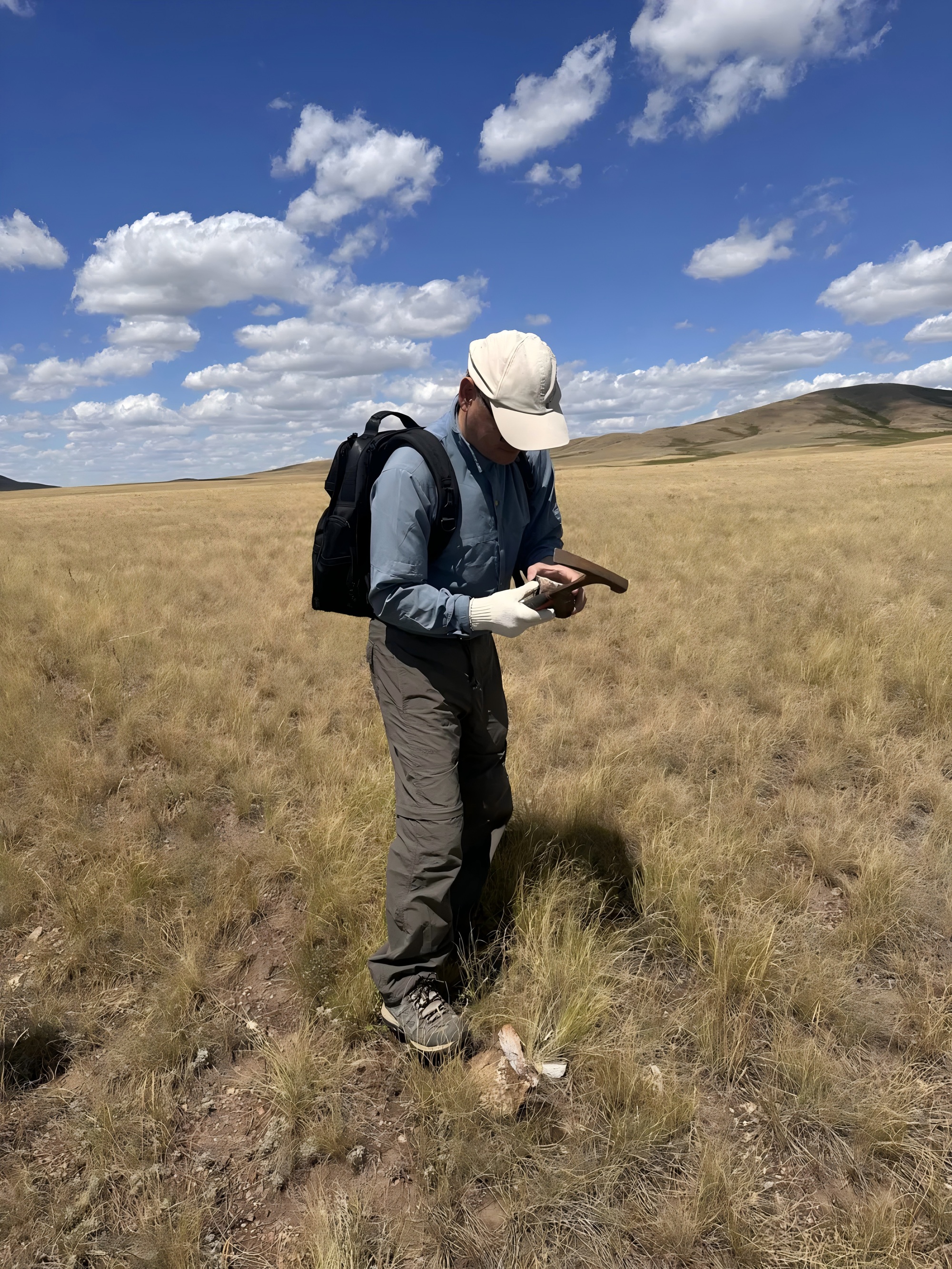
Visit the GAIA booth and see how AI enters a real exploration workflow
Mineral exploration is never just about detecting anomalies. Valuable decisions require an integrated understanding of regional tectonics, magmatic-hydrothermal activity, stratigraphy, host rocks, fault pathways, alteration zoning, geochemical associations, geophysical responses and historical engineering data.
Conventional studies can take significant time to collect reports, reconcile maps and complete expert interpretation. The challenge is even greater for overseas licences, greenfield projects, concealed orebodies and covered terrains, where datasets are fragmented, inconsistent in scale and uneven in quality.
GAIA converts information scattered across reports, maps, coordinates, satellite imagery, geochemistry, geophysics and historical drilling into geological knowledge that is computable, traceable and testable.
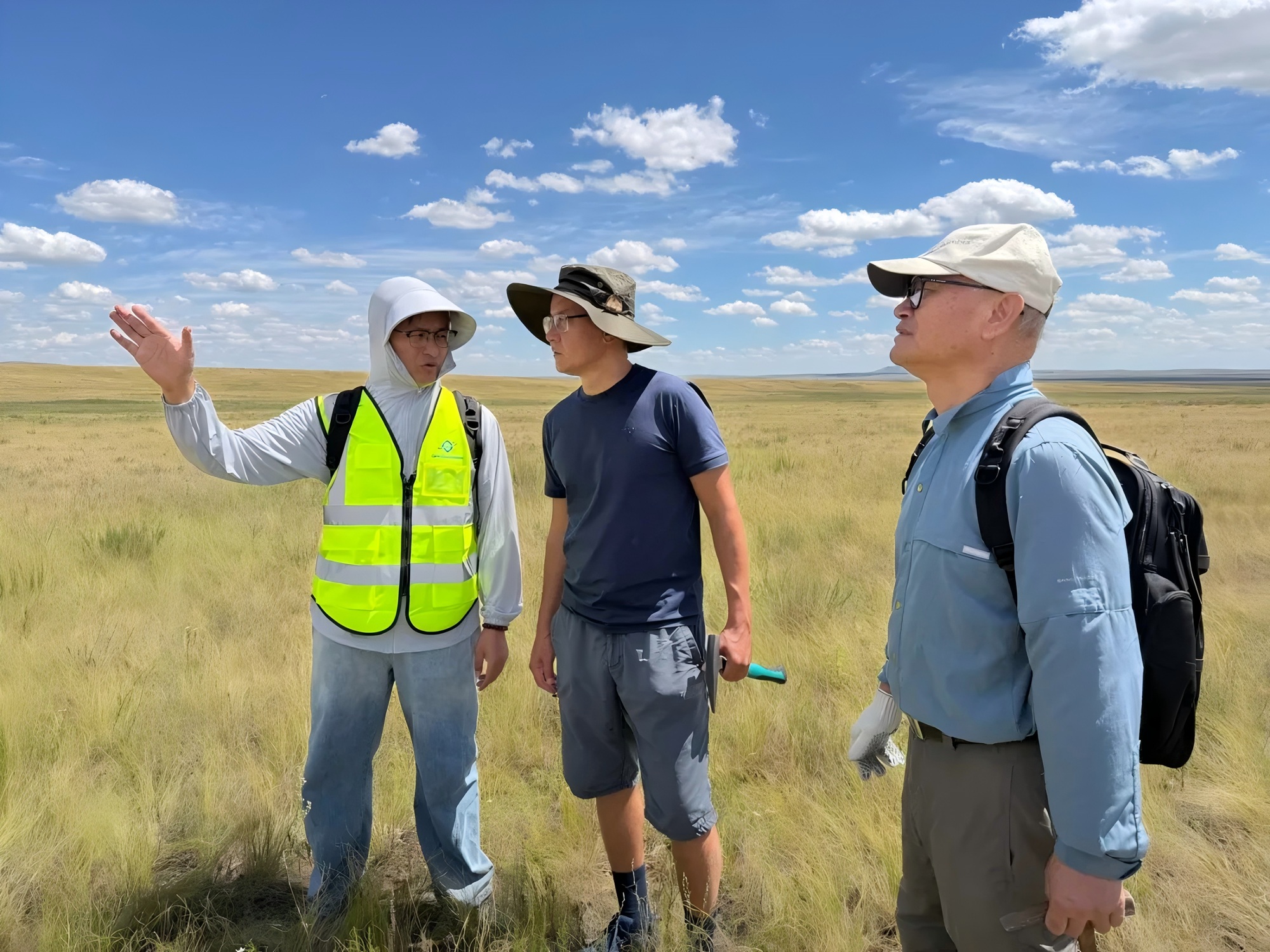
AI does not replace geologists. It helps them identify critical ore controls earlier, test whether a mineral system is complete and turn prospective zones into executable validation plans.
PART 02
What GAIA AI does: from coordinate input to target judgment
At China Mining 2026, GAIA will demonstrate how AI participates in the front end of a mineral project—from the first licence coordinates to a ranked target decision.
The system begins by locating the project within its tectonic domain, metallogenic belt and magmatic history, then evaluates plausible deposit types for commodities such as gold, copper, antimony, nickel, tantalum-niobium and polymetallic mineralization.
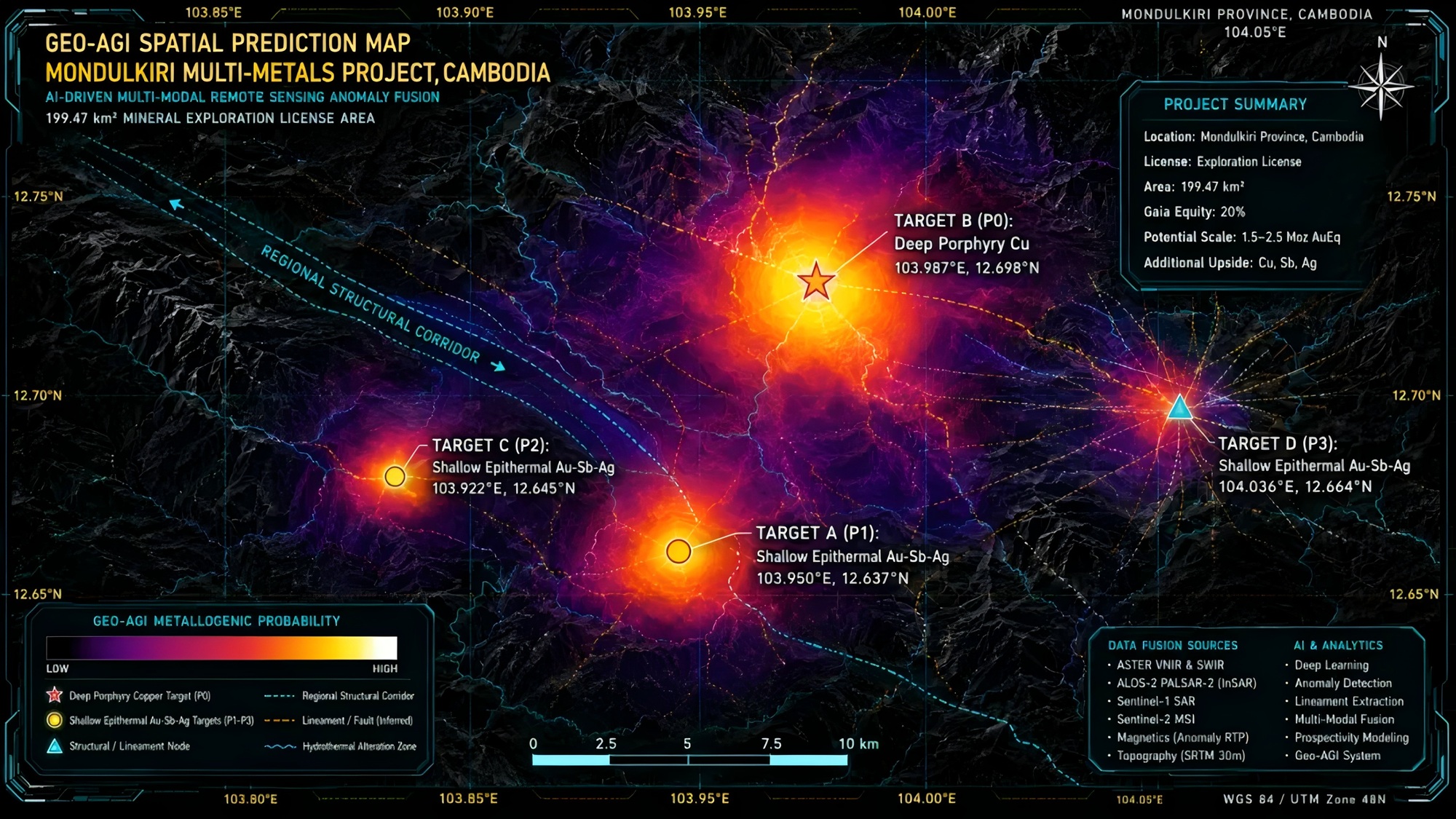
Remote-sensing alteration, lineaments, terrain, multi-element geochemistry, geophysical anomalies, known occurrences and drilling are then combined into an ore-control evidence chain.
The system looks beyond a single high value and asks whether the area contains a coherent heat source, fluid pathway, favourable host, depositional space and preservation conditions. It then outputs potential zones, ranked targets, risk flags and the next recommended verification step.
PART 03
From two-dimensional maps to three-dimensional targets
Deep exploration and concealed-ore prediction are among the most difficult tasks in modern mineral exploration. Many opportunities do not crop out; they may lie beneath cover, below known mineralization, on the margin of an orebody or in a part of the mineral system that has not yet been correctly interpreted.
GAIA will present its 3D target modelling and AI-assisted interpretation capabilities at the exhibition.
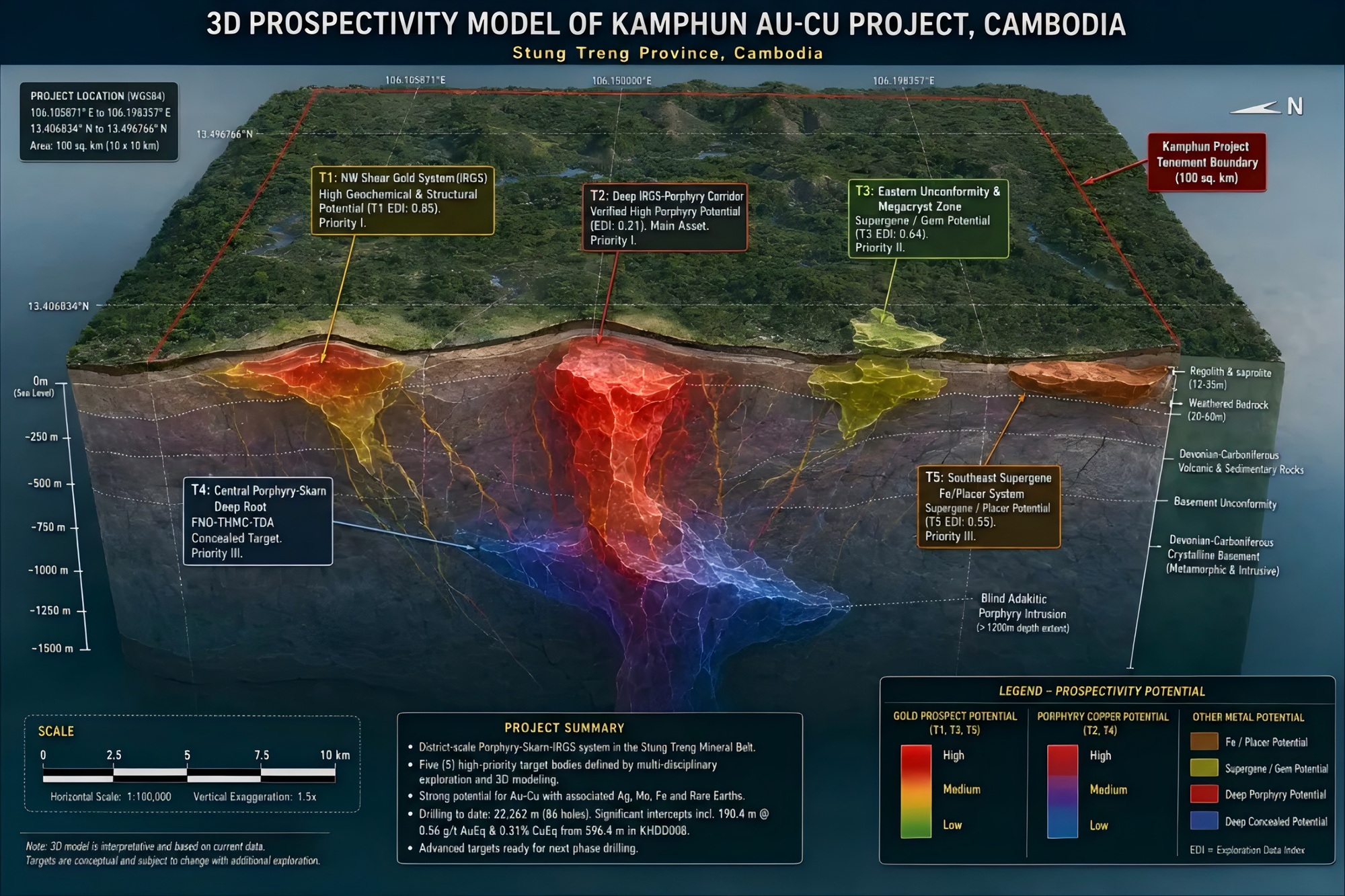
By integrating stratigraphic surfaces, fault systems, intrusive boundaries, alteration zones, mineralized trends, geophysical bodies, geochemical associations and existing engineering data, the system reconstructs the underground framework and evaluates mineralization centres, fluid pathways and possible deep extensions.
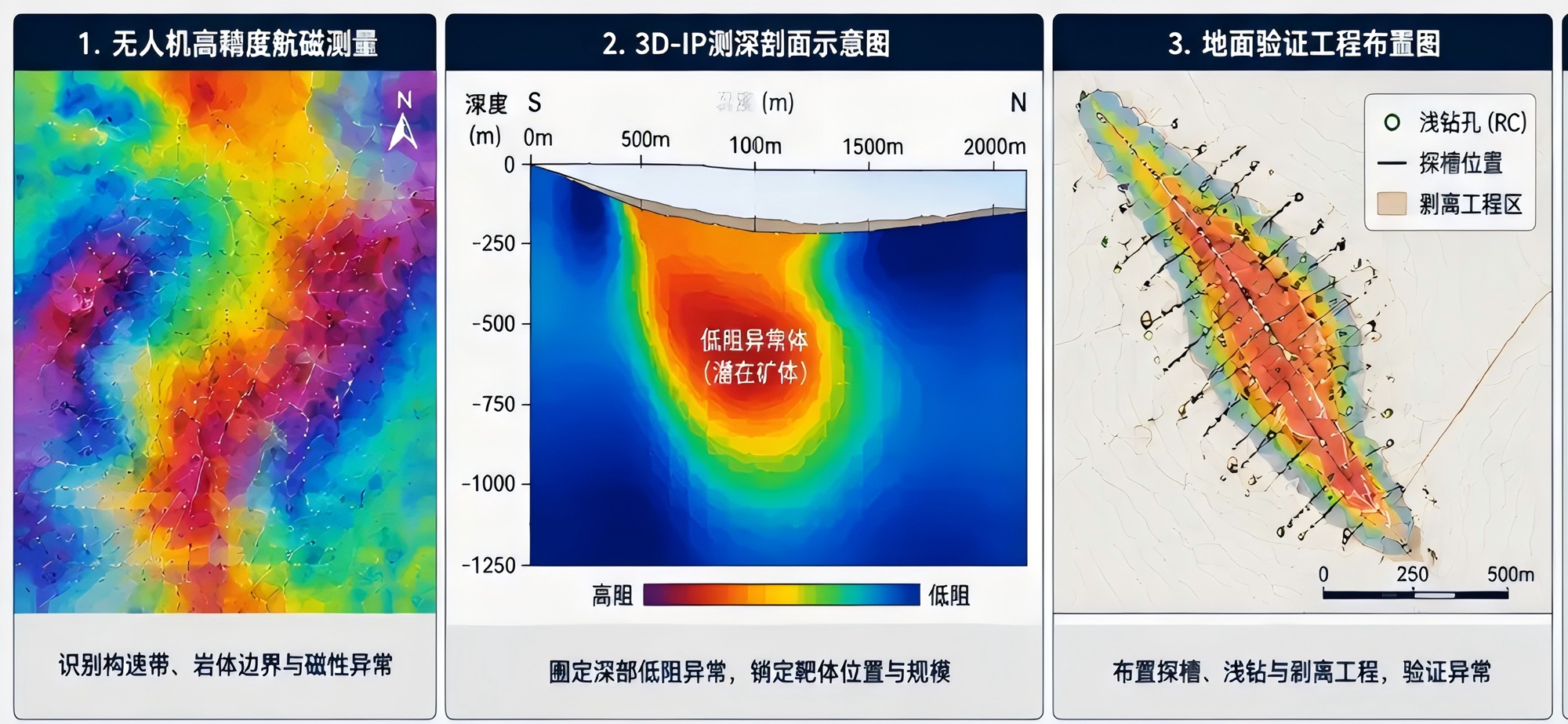
The question moves from “Where is the anomaly?” to “Why is it there, where does it sit in the mineral system, is it preserved at depth, and where should the next test be placed?”
PART 04
From licence screening to investment decisions
For mining companies, project owners and investors, the main difficulty in an early-stage licence is uncertainty. Is the project worth entering? Are the data reliable? Does the target support continued validation? How much should be invested at the next stage?
GAIA applies AI to rapid project screening, technical due diligence and portfolio prioritization. Geological foundations, data completeness, mineral-system conditions, target quality, verification cost and downside risks are evaluated together.
The goal is not to maximize the number of projects. It is to improve the speed and quality of understanding, constrain models with geology and continuously calibrate conclusions with field and engineering data—turning a licence from a potential story into an asset that can be tested, advanced and decided upon.
PART 05
Meet GAIA at China Mining 2026
GAIA will present AI prospectivity analysis, multisource geoscience fusion, deposit-type recognition, ore-control evidence chains, 3D target models, rapid overseas licence evaluation and staged verification design.
Whether your focus is overseas project screening, deep exploration, greenfield validation, mining investment and M&A, resource cooperation or the practical use of AI in exploration, we welcome you to meet the GAIA team in Tianjin.
From experience-led exploration to decisions jointly driven by data and geological knowledge, the industry is entering a new stage. GAIA looks forward to meeting mining companies, project owners, investors, geological teams and industry partners in September.