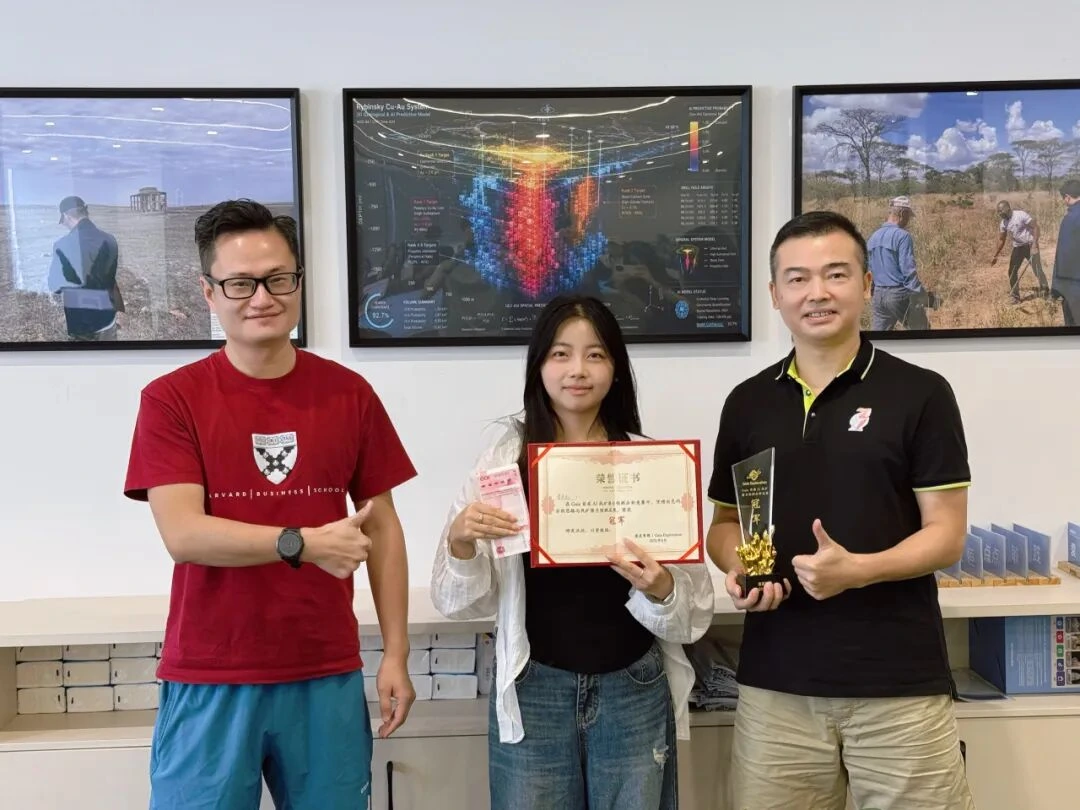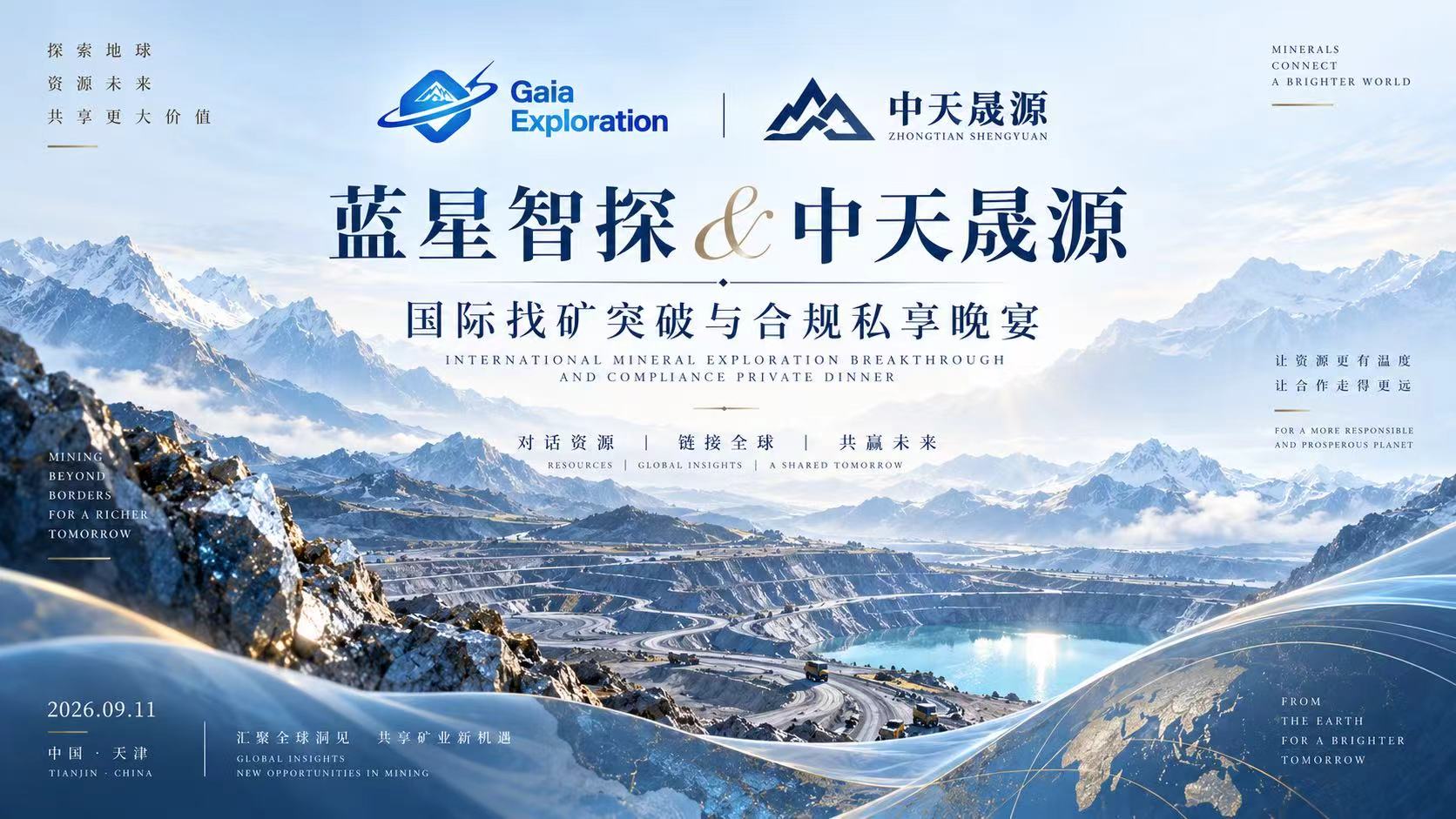
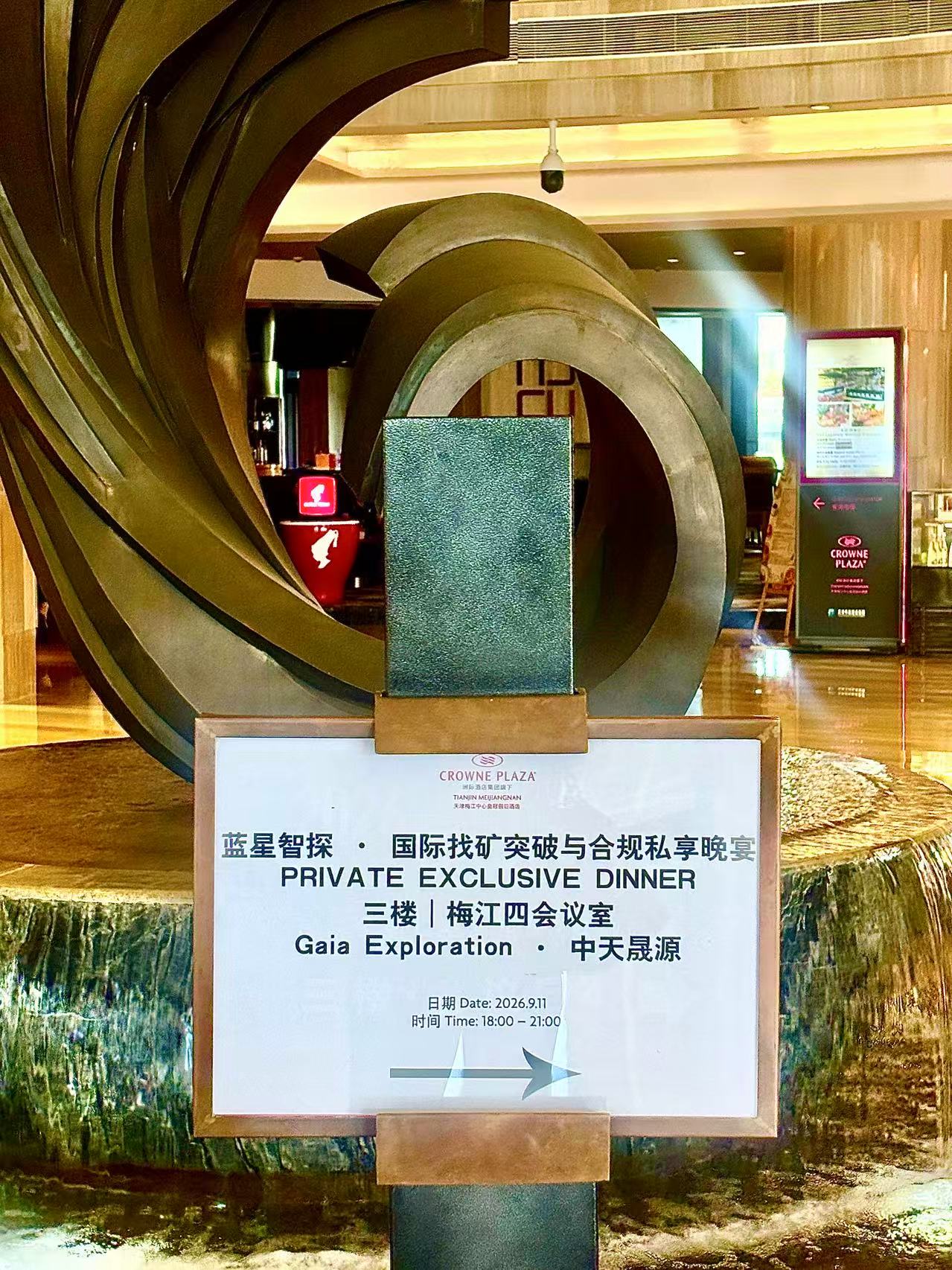
On the evening of 11 September, during the China Mining Conference, the “Private Dinner on International Exploration Breakthroughs and Compliance,” jointly hosted by Gaia Exploration and Zhongtian Shengyuan, was held in Tianjin.
Unlike the keynote speeches and project showcases of a large conference, this invitation-only dinner for 30 guests sought to bring the conversation back to mining itself: how projects should go overseas and risks should be judged; how mine efficiency can be improved and technology genuinely implemented; how high-quality resources can be discovered earlier; and how exploration results can be transformed, step by step, into mining assets that can be built and operated.
Before dinner formally began, four guests from the fields of law, mining technology, AI mineral exploration and resource development delivered thematic presentations. Although the four talks came from different disciplines, they converged on the central tasks of mining investment: controlling risk, improving efficiency, discovering resources and turning those resources into real projects.
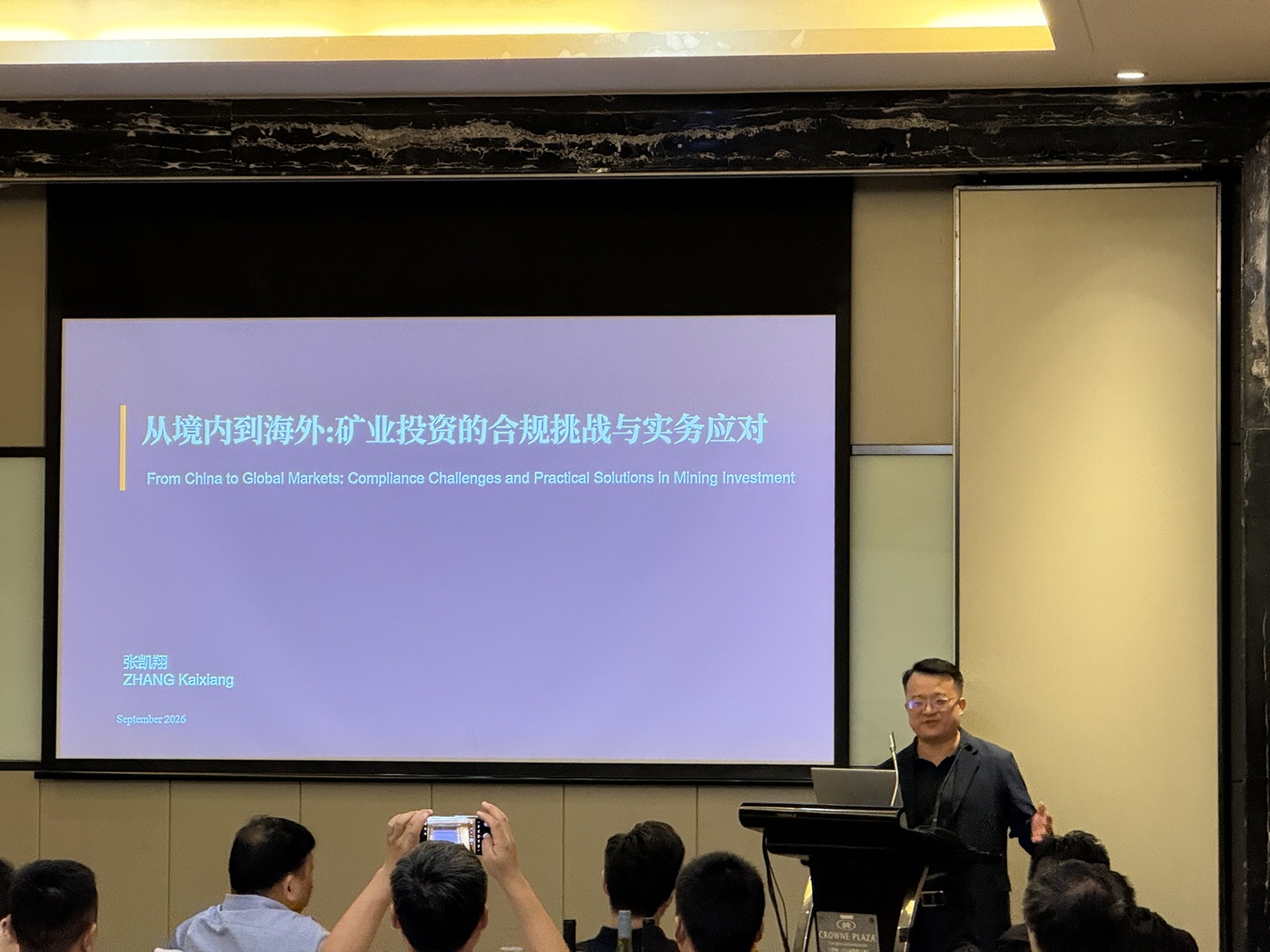
Kaixiang Zhang: Going Global in Mining Starts with Understanding Risk
Kaixiang Zhang, a partner at Tahota Law Firm, spoke on “From Domestic to Overseas: Compliance Challenges and Practical Responses in Mining Investment.” Drawing on long-term experience in cross-border investment and mining law, he addressed an issue Chinese mining companies most often underestimate when expanding overseas: mining-investment risk is never a single-point risk, but a system of interrelated risks.
From technology, law, finance, taxation and human resources to financing, operations and eventual exit, an overseas mining project usually spans multiple professional fields at once. Viewed separately, every link may appear “compliant,” yet without overall coordination, mismatches in timing, institutions or transaction structures can still impede the project. Zhang therefore summarized the core method of mining investment as “systems thinking, risk pricing and controlled practice,” stressing that investment judgment must not merely identify risks but understand how those risks affect transaction structure and project value.
One judgment ran through the entire presentation: the primary element of mining investment is trust. Overseas mining projects have long cycles, many participants and differing institutional environments. Truly sustainable partnerships must be built on a full understanding of the rules, the project and the counterparties. Risk management does not mean looking for a “risk-free” project; it means avoiding an overestimate of one's ability to manage risk and using appropriate pricing, structural arrangements and continuous validation to keep uncertainty within tolerable limits.
Zhang concluded with the phrase “conceive boldly, verify carefully and control through practice.” Mining has no absolutely certain reserves, and investment has no absolutely certain answer. Professional decision-making means maintaining discipline amid uncertainty and validating judgments through continued action.
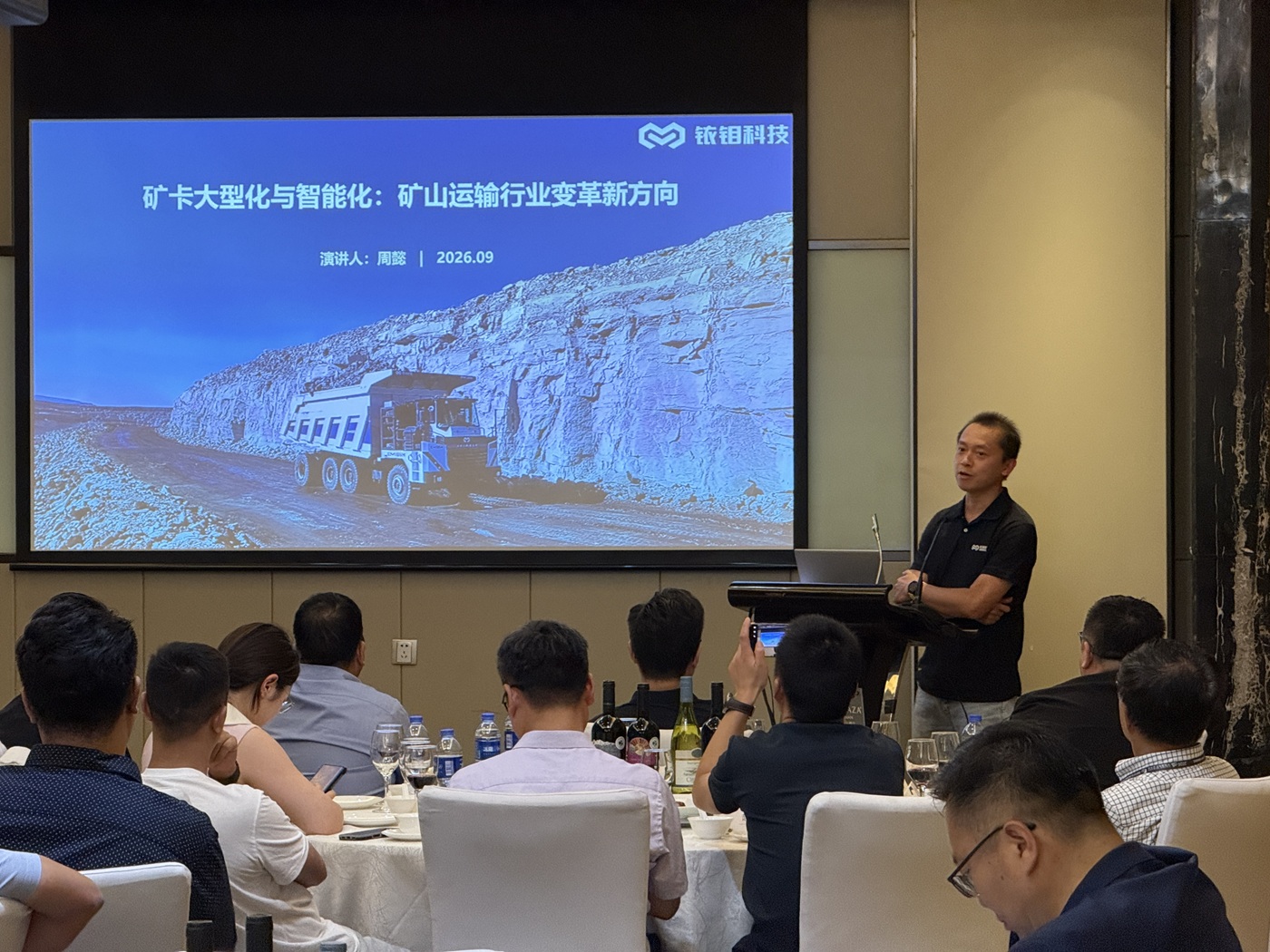
Yi Zhou: Mine Haulage Is Entering an Era of Scale and Intelligence
Yi Zhou, co-founder of Yimoly Technology, presented “Larger and Smarter Mining Trucks — The Direction of Innovation in Mine Haulage,” shifting the focus from mineral rights and capital to operating efficiency once a mine enters production.
Haulage has always been a major factor in mine productivity and cost. Rising labour costs, the mismatch between conventional haulage capacity and the intensive production of large mines, fluctuating fuel costs and growing safety-management pressure are all accelerating upgrades in mine haulage equipment. Zhou said the industry's direction is becoming clear: larger equipment increases per-vehicle capacity, intelligent systems reshape operation and dispatch, and electrification further reduces energy use and emissions.
The change brought by intelligence is not simply to “make mining trucks drive themselves.” As Level 4 autonomous driving, real-time monitoring, vehicle-condition analysis and intelligent dispatch increasingly enter mine operations, transport systems that traditionally depended on individual drivers are moving toward systematic, data-driven scheduling. Vehicle condition, load, efficiency, energy use and fault data can be continuously recorded and analysed, while mine management advances from managing individual trucks to refined management of the entire haulage system.
From a longer-term industry perspective, Zhou summarized the future of mine haulage as follows: scale is the foundation, intelligence is the core, electrification is the direction and domestic manufacturing is the opportunity. The capabilities accumulated by Chinese mining-truck companies in technology, cost and supply chains are also creating new space for Chinese equipment in the global mining market.
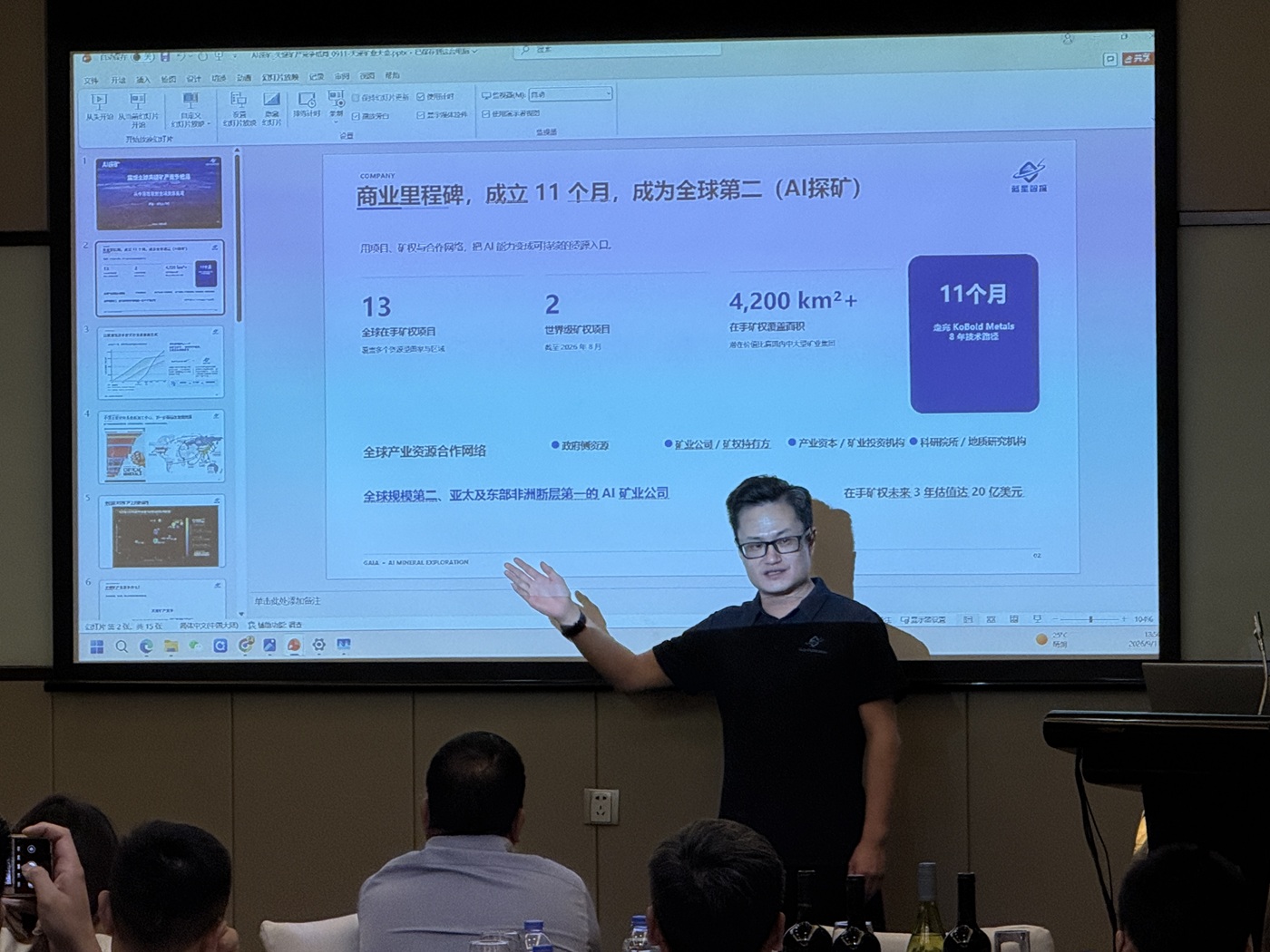
Heng Huang: Critical-Mineral Competition Is Moving Upstream to Resource Discovery
Heng Huang, founder of Gaia Exploration, presented “AI Exploration — Reshaping Global Competition for Critical Minerals.” Rather than discussing a single AI technique, he reconsidered AI exploration within the broader context of global resource competition and critical-mineral security.
Huang argued that future competition for critical minerals will not be determined only by how much mineral product a country processes or how much raw material it imports. The real issue is whether it can discover, validate and enter high-quality resource projects earlier. As shallow, readily identifiable, high-grade orebodies become scarcer, global exploration is moving deeper and toward more concealed settings. Validation costs and technical complexity are rising together, while major new discoveries themselves are becoming rarer.
In this environment, the significance of AI is not simply to make one conventional step faster. It is to reorganize the relationships among multisource information from geology, geochemistry, geophysics, remote sensing and drilling. Through a unified AI-analysis framework, Gaia Exploration aims to turn dispersed data into exploration judgments that can be ranked, compared and validated, moving exploration beyond a process highly dependent on experience toward probabilistic decisions jointly constrained by data and geological mechanisms.
Huang further introduced Gaia's technical system built around geoscience agents, high-potential target prediction, four-dimensional spatiotemporal inversion and mineralisation simulation, and drill optimisation. Its purpose is not to let AI replace geological experts, but to help teams process complex data faster, identify directions worth testing earlier and continually revise judgments through subsequent engineering work.
In this sense, AI exploration ultimately addresses mining's most traditional and important question: where should the next unit of exploration capital be invested to increase the chance of approaching a genuinely valuable resource?
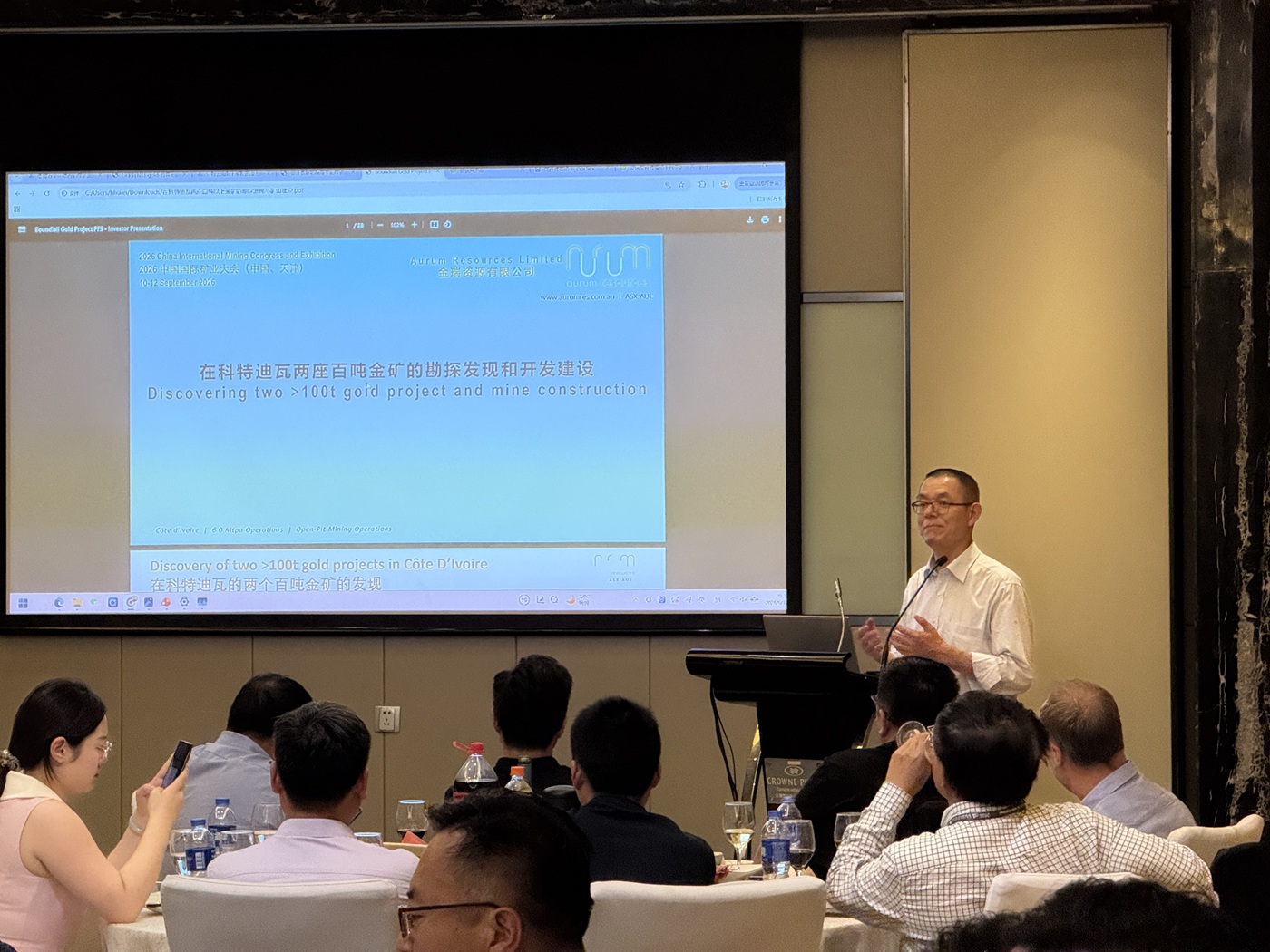
Caigen Wang: How Hundred-Tonne Gold Deposits Move from Discovery to Construction
If the first three presentations addressed risk, efficiency and resource discovery, the talk by Caigen Wang, managing director of Jinyue Resources, brought the discussion back to mining's most practical challenge: how to advance a discovery into an actual mine project.
In “Exploration Discovery and Development of Two Hundred-Tonne Gold Deposits in Côte d'Ivoire,” Wang systematically reviewed his team's long-term gold exploration and project-construction experience in West Africa. Over roughly ten years, the same exploration team advanced two hundred-tonne-class gold projects in Côte d'Ivoire: Abujar and Boundiali. Public information indicates that Abujar contains approximately 3.83 Moz of gold resources and Boundiali approximately 3.22 Moz, for a combined total of more than seven million ounces.
The focus of the presentation, however, was not merely the two resource figures. What matters is that a mining project's value is created through a sequence of connected stages: early exploration, sustained drilling and resource growth, followed by financing, engineering design and mine construction. The large Abujar gold mine was built in about 11 months. Behind that speed were both a sufficient understanding of the resource and engineering conditions and an efficient connection between exploration, financing and construction.
The Boundiali project further demonstrates the value of “continuous exploration.” Using its own drill rigs, the team continued to test multiple orebodies and new targets. Even after establishing a resource base, it kept expanding resources and improving confidence in the reserves. This experience shows that mine development does not mean exploration stops once resources are announced; exploration capability must continue throughout the project's entire life cycle.
The two gold projects show that discovering a resource is only the beginning of the mining value chain. The comprehensive capability that truly determines whether a project can be realised is the ability to continually convert geological discovery into resources, reserves, financing capacity and ultimately production capacity.
Bringing Technology, Resources and Capital Together Where They Create Real Value
With the four guest presentations complete, the evening's thematic session came to a successful close. From compliance and risk control in overseas mining investment to larger and smarter mine haulage; from AI-enabled discovery of critical minerals to the journey of two hundred-tonne-class gold projects from exploration to construction, the four talks traced a complete mining value chain from different professional perspectives: discover resources, assess value, control risk, improve efficiency and ultimately transform resources into viable mining projects.
Dinner then formally began. For Gaia Exploration, the private event was more than an industry gathering. It aimed to create, beyond the setting of a large conference, a place for deeper exchange—bringing together people who have actually delivered projects, understand technology, know capital and have participated in global mining over the long term, so they can exchange experience, discuss judgments and connect resources and opportunities that may lead to future cooperation.
Gaia has always believed that mining's long-term value will not come only from a single technology, a single mineral right or a single transaction. It comes from better resource-discovery capabilities, more accurate project judgment and more efficient connections among geology, technology, capital and industry resources. This is why Gaia continues to advance AI mineral exploration, global resource cooperation and the development of a mining ecosystem.
As a technology company using AI to drive mineral discovery and enhance resource value, Gaia Exploration aims to do more than provide a new exploration tool. It seeks to help mining companies, investment institutions and resource partners identify opportunities earlier, judge risks more clearly and allocate limited exploration and investment capital to projects with genuine long-term value.
From AI exploration to project evaluation, and from technical validation to global resource cooperation, Gaia is continually extending its capabilities across a more complete mining value chain.
The dinner has ended, but the industry's truly valuable conversations continue.
Gaia Exploration looks forward to working with more global mining partners—to understand the subsurface with AI, judge resources with professional expertise and connect value through long-term cooperation.