Let AI Enter Real Geoscience Workflows
AI for Real Geoscience Work
—Global Launch of the Gaia Geoscience Agent Platform
Introducing the Gaia Geoscience Agent Platform
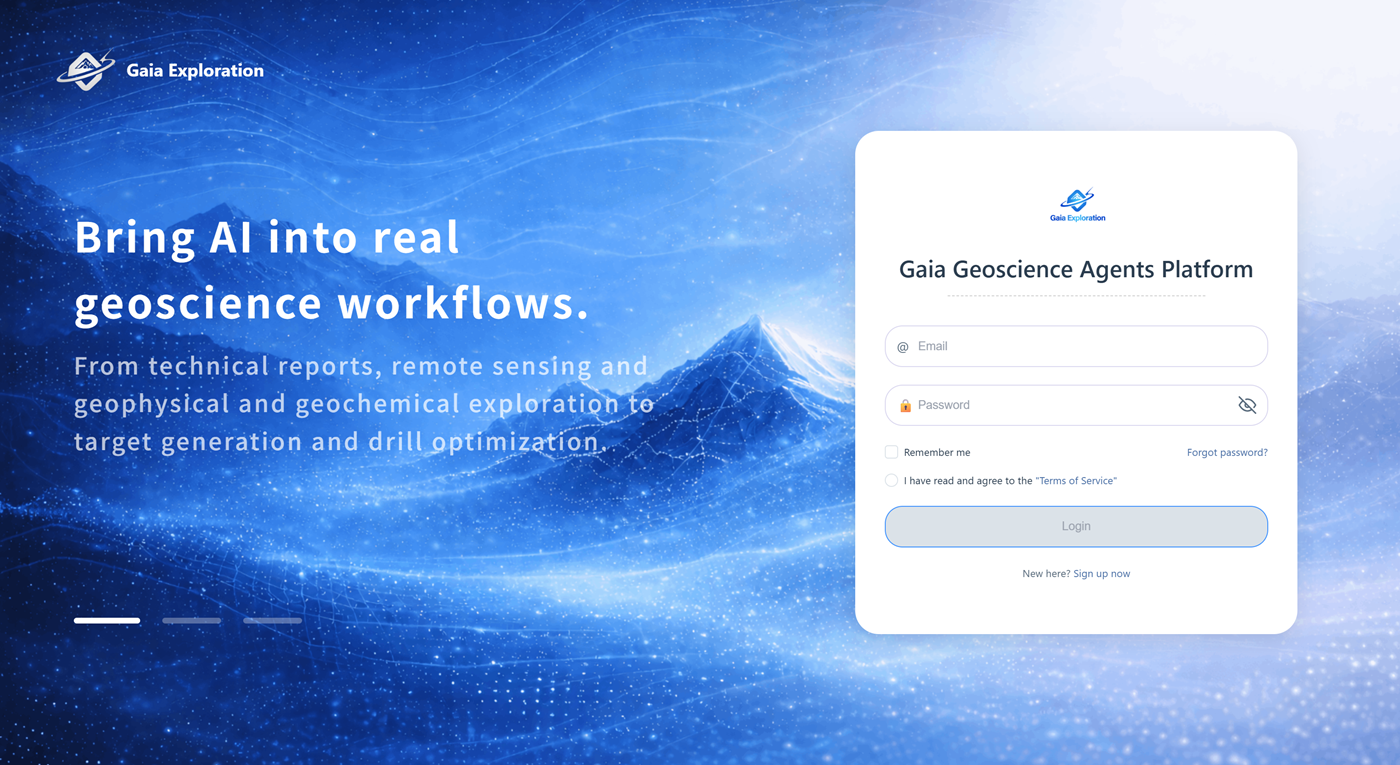
On 10 September 2026, the first day of the China Mining Conference and Exhibition, GAIA Exploration officially launched the Gaia Geoscience Agent Platform.
This launch is not intended merely to add another “AI mineral-exploration tool,” nor to introduce a “geological foundation model” that claims to answer everything. GAIA seeks to address a practical question: when AI enters real geological work, how should it participate in professional tasks and collaborate with the software, data, models and systems of judgment already used by geoscientists?
Over the past several decades, geoscience software has greatly improved data processing, modelling and visualisation, yet the basic working method has not fundamentally changed. Geoscientists still import data, configure parameters, select methods, inspect results, judge whether they are reasonable, and then assemble figures and reports. If AI merely adds a chat window beside existing software, the working method has not truly changed. By proposing the product category of a “Geoscience Agent Platform,” GAIA aims to move AI beyond question answering and isolated functions into complete professional workflows.
The core change behind the platform can be expressed in one sentence: in the past, people operated software; now, people define tasks, agents assist by calling data, models and tools to complete the work, and geoscientists conduct the professional review.
From Geoscience Software to Geoscience Agents
Conventional geoscience software is fundamentally a system of tools. It can calculate, interpolate, model and draw, but it does not usually understand the problem a geoscientist is trying to solve. Users must understand the logic of the software and translate their professional judgment into a sequence of operations.
A geoscience agent is different because it is oriented first toward the “task” rather than the “button.” Under the new working model, a geoscientist can begin with a professional question—for example, analysing a geochemical dataset, comparing several exploration targets, organising historical reports, checking drilling data or generating spatial-analysis results for an area. After understanding the task, the agent calls the relevant data, tools and models according to the project context, completes the analysis, organisation and output, and then passes the result to a professional for review. The source workflow describes this sequence as: “understand data–select methods–call tools–analyse–validate–produce figures–generate a report–recommend the next step.”
This change does not make geological expertise less important. On the contrary, it concentrates professional judgment where it matters most. Considerable time has traditionally been spent operating software, organising files, converting formats and repeating analyses. In the future, parts of these activities can gradually be delegated to agents, allowing geoscientists to devote more attention to mineral-system interpretation, evaluation of evidence and engineering decisions.
For this reason, GAIA does not define the platform as a “geological foundation model” or an “exploration foundation model.” The term “foundation model” emphasises the underlying technology, while “exploration” could confine the product to a single prospectivity-mapping scenario. “Geoscience Agent Platform” more accurately covers tasks in geology, geochemistry, geophysics, remote sensing, GIS, exploration engineering and selected areas of mining engineering.
Not a Universal Robot, but a Group of Specialist GeoAgents
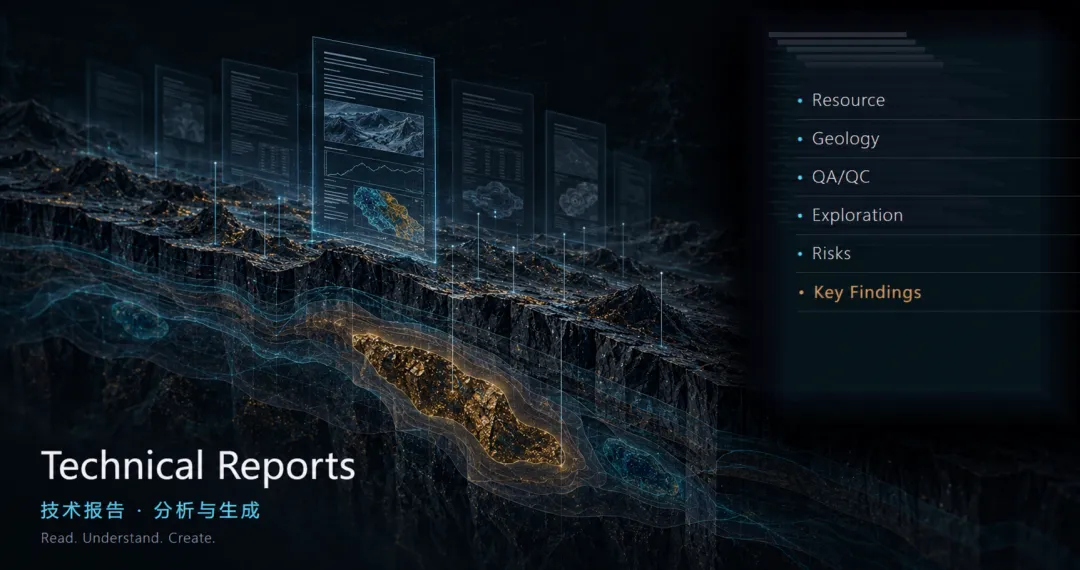
Real geological projects are never single tasks. Mineral exploration commonly involves historical reports, regional geology, remote sensing, geochemistry, geophysics, spatial data, drilling and subsequent engineering design. The data structures, professional logic and validation methods for these tasks differ. Attempting to solve every geological problem with one “universal AI” therefore does not reflect real working practice.
The Gaia Geoscience Agent Platform takes another approach: it builds a group of Gaia GeoAgents around different professional tasks, assigns each agent the work for which it is best suited, and enables them to collaborate within a unified project environment.
The current platform includes the Gaia Report Agent, Gaia Geochem Agent, Gaia Geophysics Agent, Gaia Remote Sensing Agent, Gaia Targeting Agent, Gaia Drill Agent, Gaia GIS Agent, Gaia Coding Agent and Gaia Mining Engineer Agent. They support technical-report analysis, geochemistry, geophysics, remote sensing, mineral-potential and target assessment, drilling, GIS spatial data, coding and data processing, and selected mining-engineering tasks.
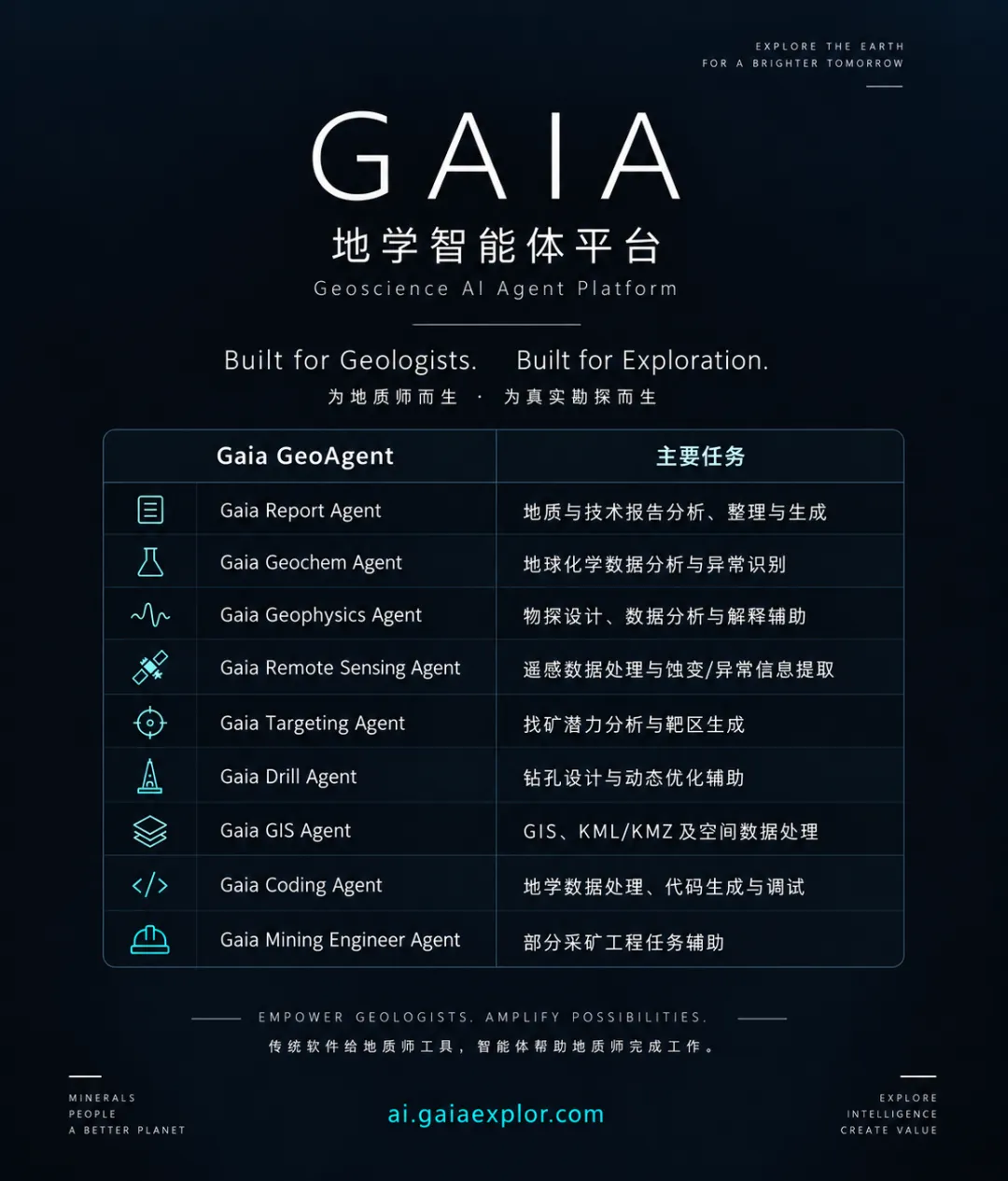
These agents are not isolated functional modules. A real project may begin with the Report Agent organising historical material, then use the Geochem or Geophysics Agent to process specialist data. The Targeting Agent can compare prospects using the available information, the GIS Agent can organise the spatial evidence, and later work can move into drilling or other tasks according to the engineering stage.
The “Agent Platform” defined by GAIA is therefore not simply a better conversational interface. It is a working environment that progressively connects specialist agents, project data, models, tools and workflows. The focus is not “how many questions can AI answer?” but “in how many real geological tasks can AI help complete the work?”
The Real Difficulty Is Entering Complex Geological Context
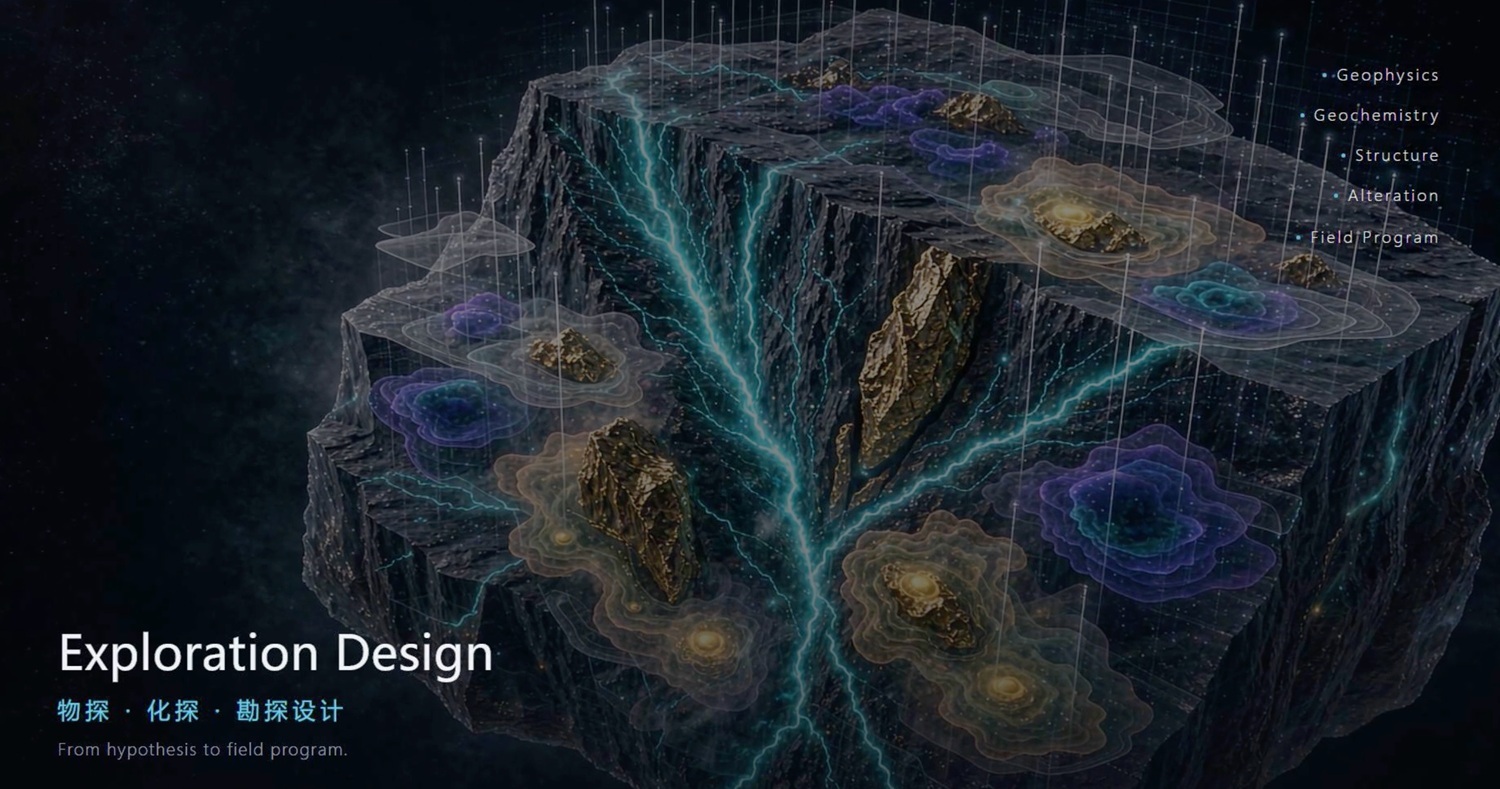
The complexity of geological work comes not only from the volume of data, but also from the complexity of the relationships among those data.
Material for a mining project may span decades and come from different organisations, countries and coordinate systems. Geological interpretations in historical reports may be inconsistent with new geophysical results; remote-sensing anomalies may support one alteration model while geochemical data point toward another interpretation. Some drillhole information may be highly reliable, while other historical records may consist only of scanned drawings or incomplete logs.
In such an environment, simply generating an answer has little value. Professional AI must handle “context”: which data belong to the same project, which information can validate other information, where evidence conflicts, which conclusions are interpretations rather than facts, and where the most important current data gaps lie.
This is why GAIA emphasises “real geoscience workflows.” The value of vertical AI is not a more attractive chat interface; it is the ability to reorganise complex, fragmented and uncertain geoscience information into professional judgments that are explainable, traceable and verifiable.
For example, in a regional exploration task, AI can help organise existing reports, process geochemical and remote-sensing data, compare different areas spatially and generate candidate targets. However, determining which anomalies are truly meaningful for mineralisation still requires regional geology, deposit models and expert judgment. As new field mapping, geophysics or drilling results arrive, the earlier interpretation should continue to be tested and revised.
The design principle of the Gaia platform is therefore not to let a model “make decisions for the geoscientist.” AI performs more information processing, task execution and evidence organisation while geoscientists retain control over critical interpretation and engineering decisions.
From Isolated AI Tools to a Continuous Workflow
A growing number of AI tools are appearing in mining, but many still focus on isolated functions. Some are good at summarising reports, some identify features in remote-sensing data, some perform mineral-prospectivity prediction, and general tools can handle code or data analysis. Each has value, but real geological work usually crosses several stages.
A project does not end after one remote-sensing analysis, nor does it automatically proceed to drilling after a target map is produced. Reports, data, models, spatial analysis and engineering work form a continuous relationship. Every time users enter a new tool, they often must import files again, explain the project background again and rebuild the context.
The Gaia Geoscience Agent Platform is designed to address precisely this fragmentation.
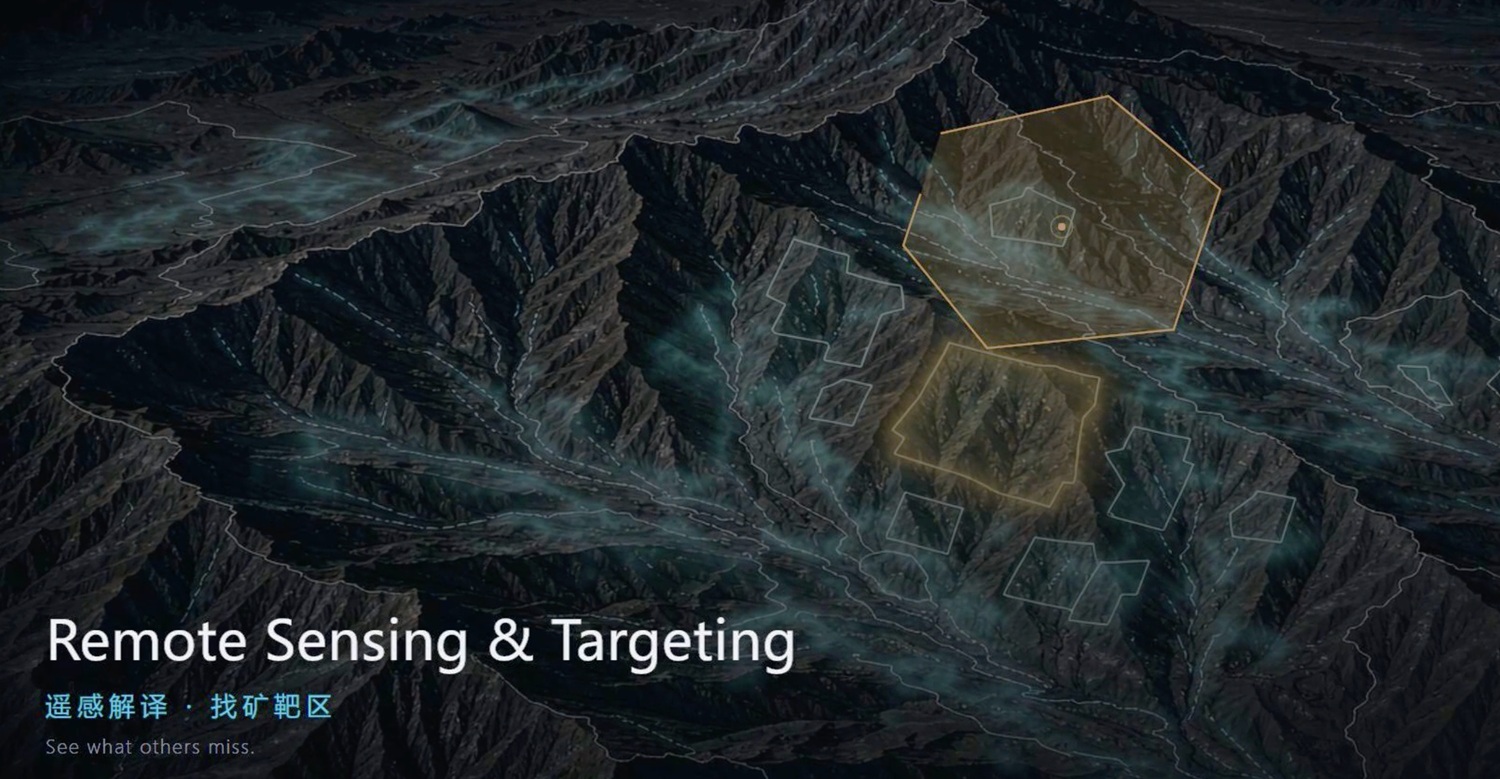
The platform aims to form a workspace that understands project context, enabling specialist agents to share the necessary information within the same project and collaborate continuously around geological tasks. Report analysis is no longer isolated text processing, while geochemical and remote-sensing results are no longer one-off figures; they can continue into target assessment, spatial analysis and later engineering work.
At the China Mining Conference and Exhibition, GAIA’s demonstrations focus on real geological tasks, including mineral-potential analysis and targeting, geochemistry, remote sensing, Google Earth/GIS and drilling applications.
This is the central meaning of the launch theme “AI for Real Geoscience Work”: only by entering project context, professional data and continuous tasks can AI move from a demonstration tool to a production tool.
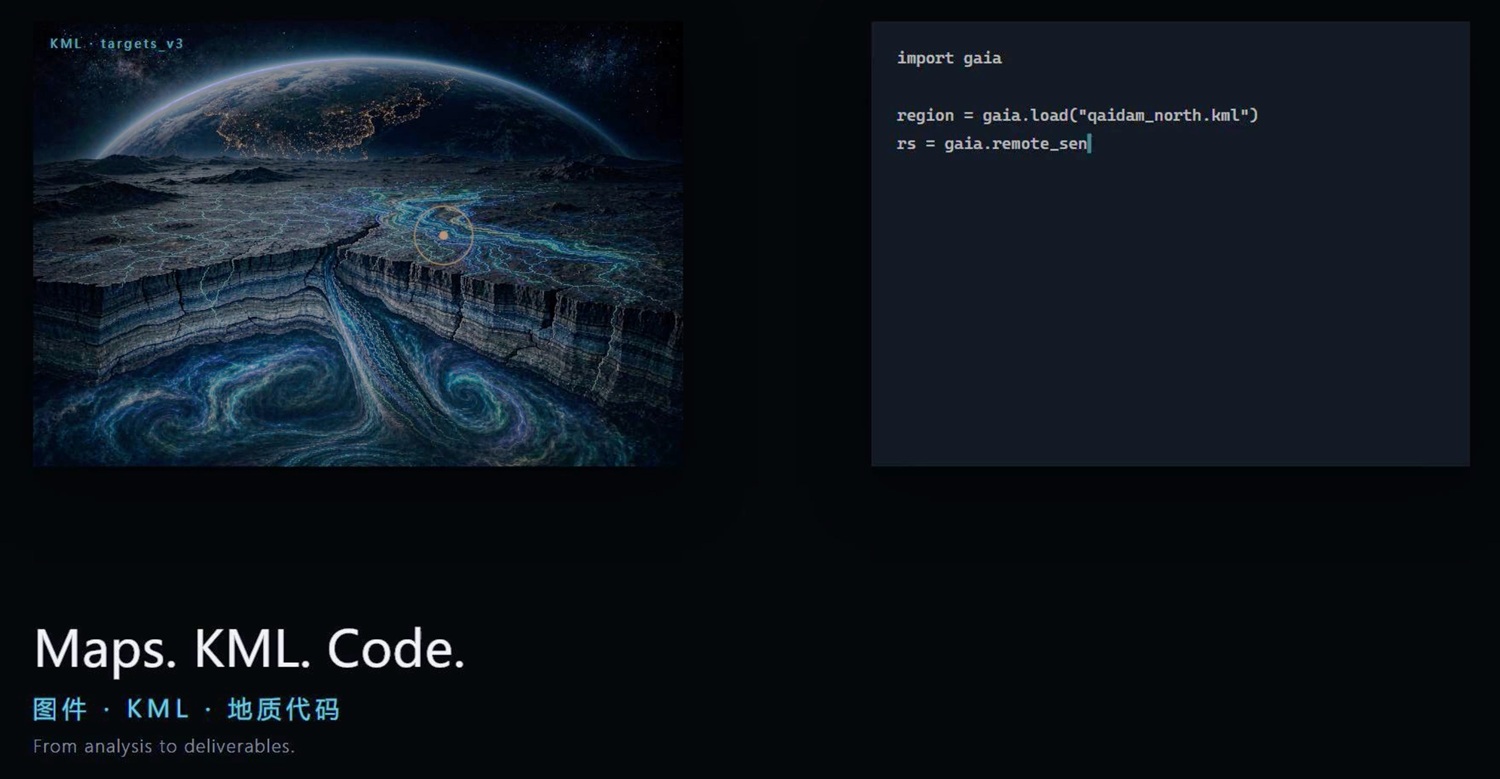
The Agent Era of Geoscience Is Beginning
Generative AI first changed the relationship between people and information. Agentic AI is now further changing the relationship between people and software. AI no longer simply waits for a user’s question and generates text; it is beginning to understand tasks, call tools and complete multistep work. The source material describes the industry trend as a transition from generative AI alone toward “multi-specialist agents collaborating to complete workflows.”
This change is particularly relevant to geoscience. Mineral exploration is inherently a highly multidisciplinary system. From reports and regional geology to geochemistry and geophysics, and from targets to drilling, every stage requires different data, methods and specialists. The value of agents lies precisely in their ability to connect these tasks progressively rather than merely optimising one stage.
GAIA’s decision to formally launch the Geoscience Agent Platform is based on this judgment. However, we do not intend to present it prematurely as an “operating system” covering the entire mining lifecycle. Under its current positioning, the platform first focuses on real geoscience and mineral-exploration work, deepening the integration of specialist agents, project environments, data and tools. As these capabilities mature, the platform has longer-term potential to expand into more complete geoscience-intelligence infrastructure.
The form of the product can continue to evolve, but GAIA intends to maintain one stable principle: AI is not designed to separate geological work from geological experts. It reduces repetitive software operation and information processing so that human professional judgment can concentrate on what truly matters.
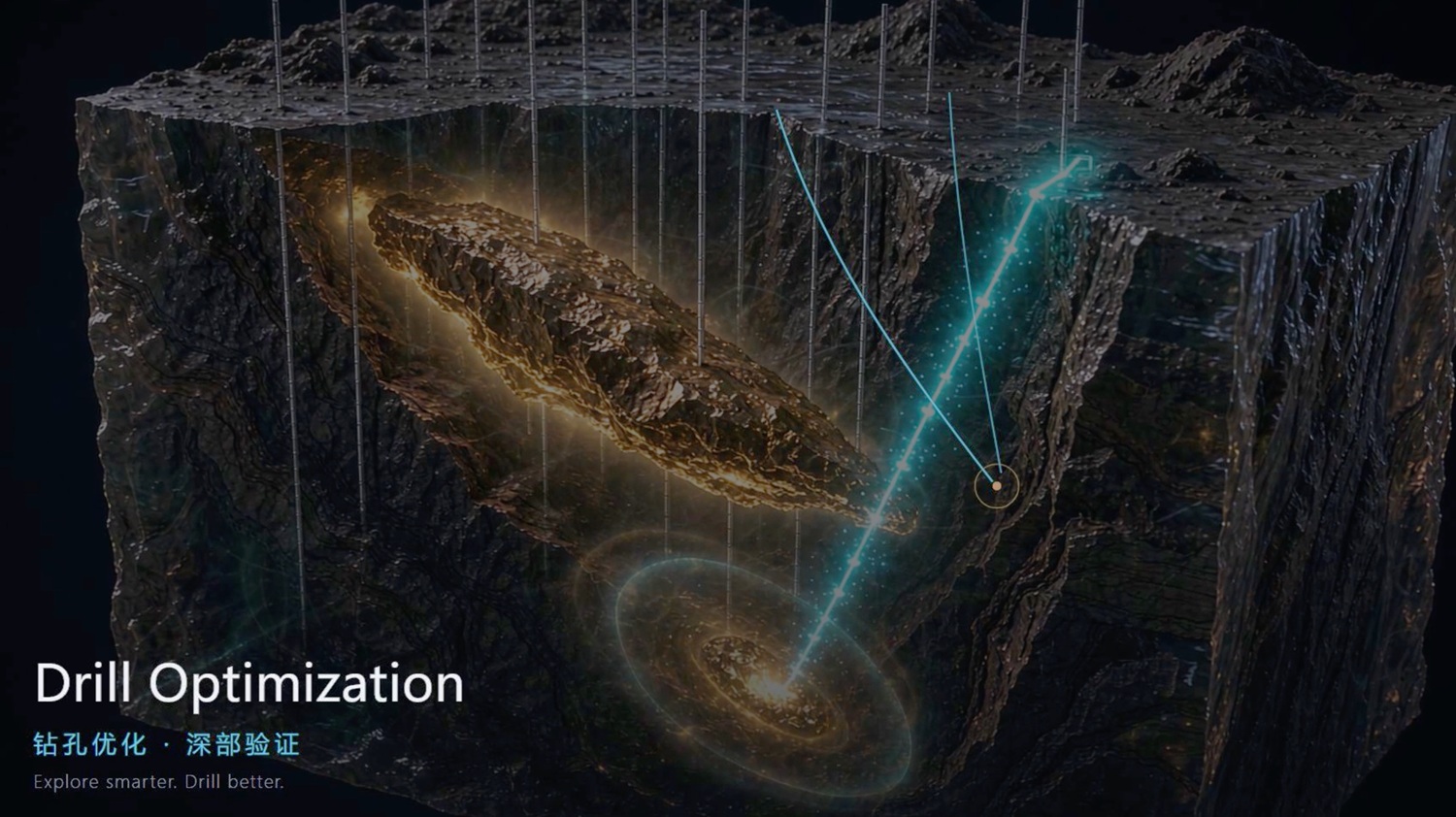
Conclusion: Put AI into the Hands of Geoscientists
In the past, geoscientists had to learn how to operate increasingly complex software. Today, a new way of working is emerging: geoscientists define the problem and professional boundaries; agents help understand data, call tools and complete tasks; and geoscientists remain responsible for the results.
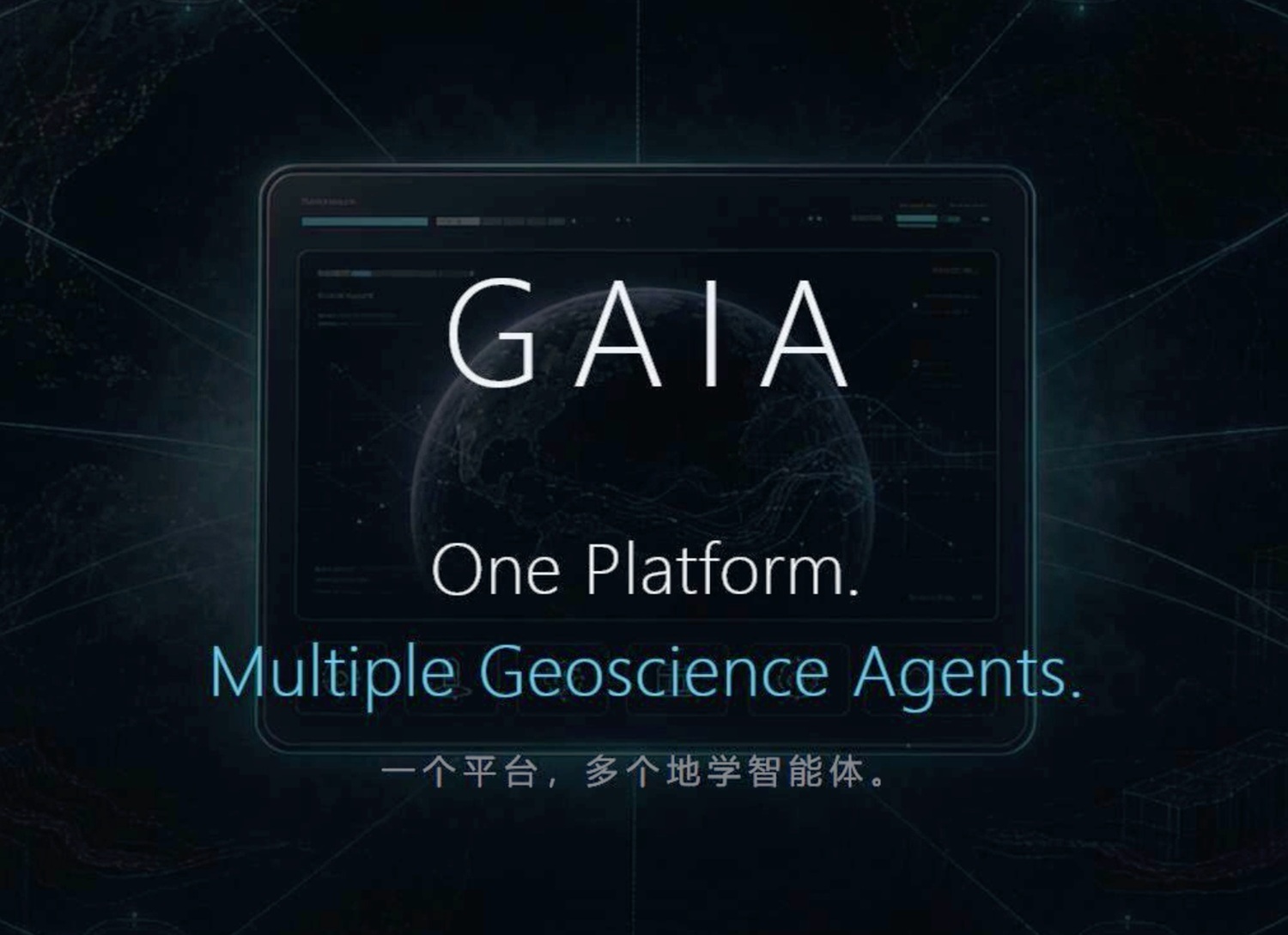
This does not diminish the role of people. On the contrary, as AI begins to handle more data and repetitive tasks, understanding mineral systems, judging data quality and making professional decisions under uncertainty become even more important.
Through the Gaia Geoscience Agent Platform, GAIA Exploration aims to move AI from general question answering and isolated prediction into real geological work, progressively bringing reports, geochemistry, geophysics, remote sensing, GIS, targeting and drilling into a continuous intelligent working environment.
10 September 2026, China Mining Conference and Exhibition.
Gaia Geoscience Agent Platform—global launch.
Traditional software gives geoscientists tools; agents help geoscientists complete the work.
Scan the code to experience the Gaia Geoscience Agent Platform now.