In mining investment, project acquisition and resource evaluation, geological exploration reports are often a primary basis for judging a project's potential.
From mineral-resource estimates and ore grades to geological models and exploration results, the data and conclusions in a report affect not only project valuation but also subsequent exploration planning and investment decisions.
A detailed report, however, does not mean that every conclusion has been adequately verified.
When key data lack support, resource classifications are unclear, or different sections contradict one another, these issues can become important risks for subsequent technical due diligence.
Before committing more time and money to in-depth due diligence, can the report itself first undergo a systematic preliminary review?
GAIA now offers a new AI-assisted solution.
01 Risk May Be Hidden in the Details
Technical reports for mining projects usually contain large volumes of geological data, charts, resource estimates and specialist conclusions. Faced with complex technical material, summaries or individual metrics alone are insufficient to determine comprehensively whether the report's evidence is adequate.
The following types of issue deserve particular attention.
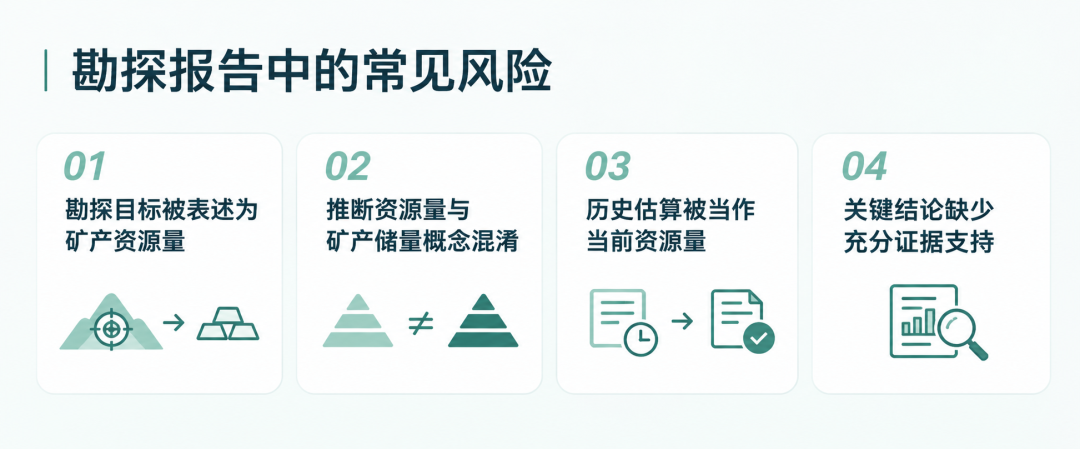
① An Exploration Target Is Presented as a Mineral Resource
An Exploration Target and a Mineral Resource have different definitions and evidentiary requirements.
Presenting a highly uncertain Exploration Target directly as an estimated Mineral Resource may cause readers to overestimate the project's exploration maturity.
② Confusing an Inferred Mineral Resource with a Mineral Reserve
An Inferred Mineral Resource is not the same as a Mineral Reserve.
Establishing a Mineral Reserve requires greater geological confidence and evaluation of relevant modifying factors. Confusing resource categories may distort an investor's view of a project's development potential.
③ A Historical Estimate Is Treated as a Current Resource
Some project reports may cite resource estimates prepared many years ago.
But has the historical estimate been revalidated? Are its reporting standard, technical methods and data basis appropriate for the current project evaluation?
Without the necessary explanation, historical data may be misread as a currently confirmed resource.
④ Key Conclusions Lack Sufficient Supporting Evidence
Examples include contradictions between the resource estimate and figures or tables in the report, important conclusions unsupported by source data, or insufficient disclosure of site visits and verification by relevant professionals.
These issues do not necessarily mean that the report contains a false statement, but they do indicate a need for further professional review.
The real question is not only what the report says, but what evidence allows it to reach those conclusions.
02 GAIA Launches the Exploration Report Credibility Assessment Agent
To meet the practical need for preliminary review of mining technical reports, GAIA Exploration has officially launched its Exploration Report Credibility Assessment Agent, providing AI-assisted support for technical due diligence on mining projects.
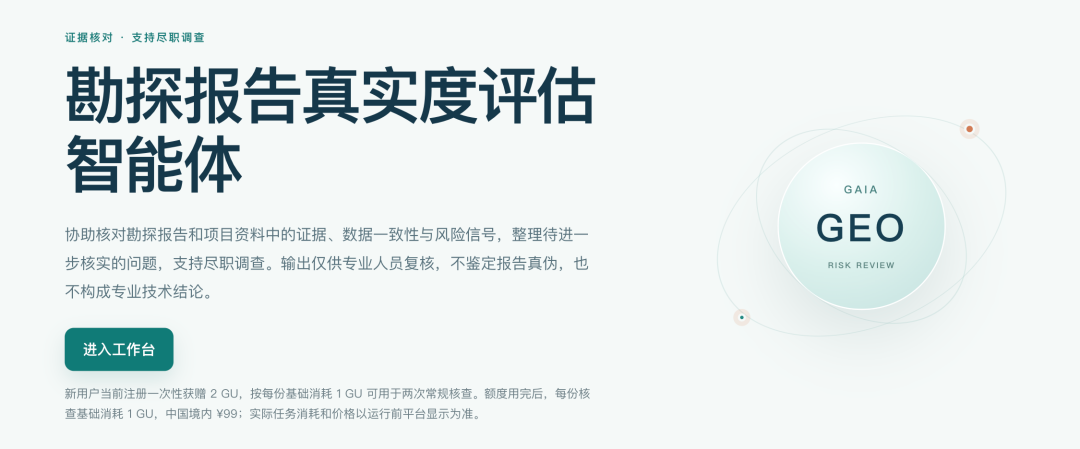
Built on the GAIA Geoscience Agent Platform, the agent performs a structured preliminary review of user-supplied technical materials, focusing on data consistency, key conclusions and supporting evidence. It helps users identify more precisely the issues that require further verification.
Its core areas of attention include:
Data Consistency Checks
It examines whether data for the same project or object use consistent definitions across sections, tables and figures, and flags possible numerical contradictions.
Cross-Checking Key Conclusions and Evidence
It examines whether technical conclusions have a corresponding data basis and identifies possible gaps between conclusions and the available evidence.
Identifying Risks in Resource Statements
It checks whether Exploration Targets, Resources, Reserves and historical estimates are properly distinguished, and points to content requiring further review under the applicable reporting standard.
Organizing Leads for Professional Review
It helps users organize issues that merit close attention, providing a reference for subsequent review by geological experts, field investigation and formal technical due diligence.
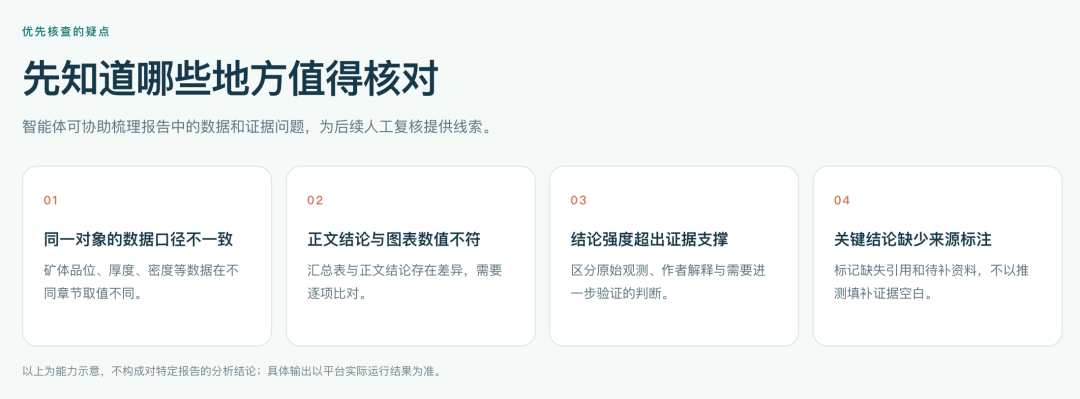
With this agent, GAIA aims to turn the preliminary review of complex reports into a more orderly and evidence-based process.
Let AI help find the questions, so professionals can focus on the evidence that truly needs verification.
03 Which Mining Business Scenarios Is It Designed For?
Mining Investment and M&A Teams
During project screening, pre-investment evaluation and acquisition negotiations, it can help identify potential concerns in technical reports and define priorities for further due diligence.
Mining Development and Exploration Companies
When evaluating a new project, reviewing geological material supplied by a partner or conducting an internal project review, it can help organize key data and technical support.
Geological Consulting and Technical Due-Diligence Firms
Before formal professional review, it can screen documents, organize concerns and evidence gaps, and provide a reference for deeper analysis.
Mineral Project Owners
Before promoting a project or providing technical materials externally, it can help check internal consistency and evidentiary completeness and identify ways to improve the materials.
Whether they are project investors or technical service providers, users can incorporate this agent as an auxiliary tool within a professional review process.
04 New Users Can Experience Two Project Assessments Free
To allow more mining professionals to experience the practical value of AI-assisted technical-report review, GAIA has opened a new-user trial.
New users receive 2 GU upon registration, enough for two real project assessment analyses.
How to try it:
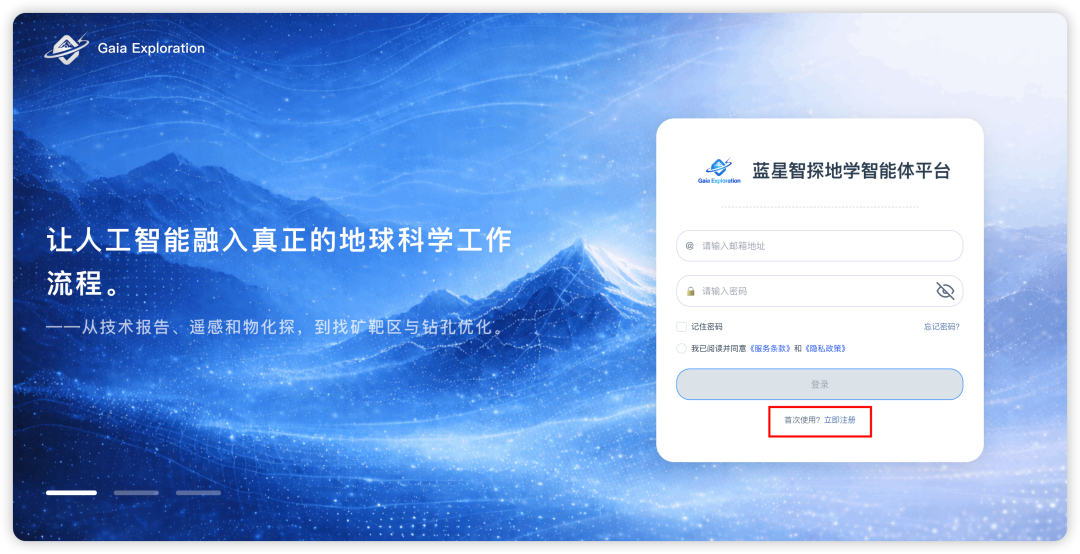
1. Scan the QR code shown in this article to visit the official GAIA Geoscience Agent Platform page, then register or sign in.

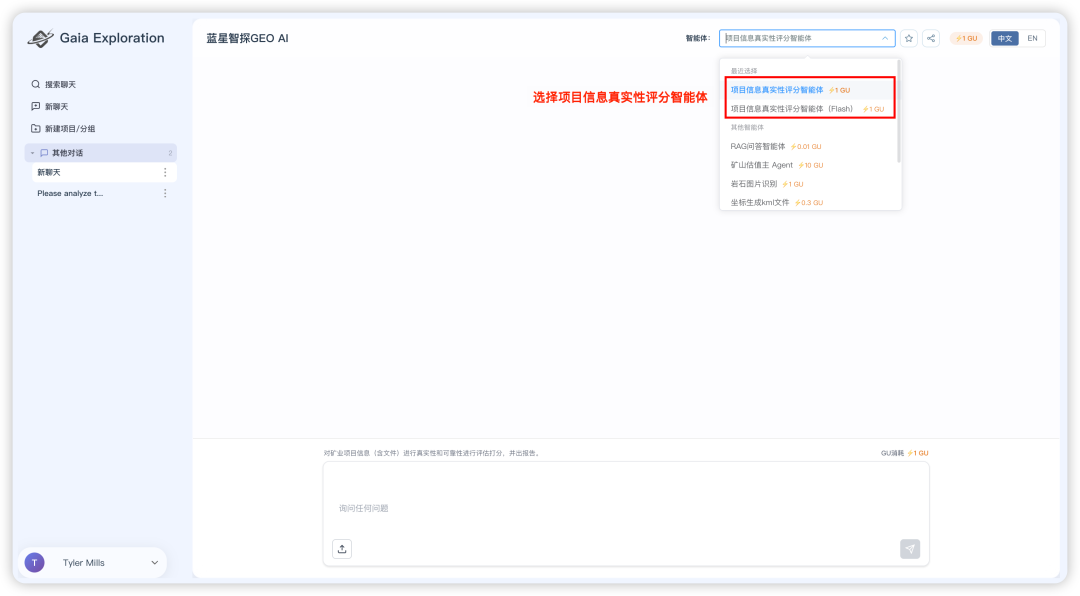
2. Enter the GAIA workspace and select the corresponding agent as shown.
3. Submit the task and relevant materials under the rules currently supported by the platform, and begin the AI-assisted analysis.
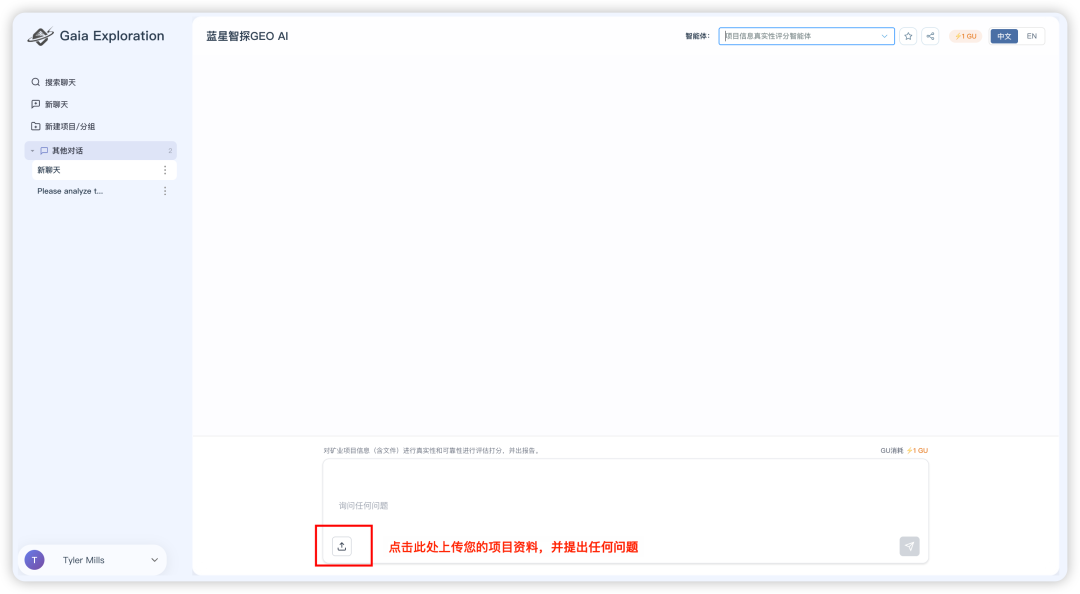
Note: 2 GU is the current one-time credit granted to a new user. Grant rules and scope may change; the platform's latest policy and the amount shown in the account prevail.
05 Base Mining Investment Decisions on Clearer Evidence
The value of a mining project depends not only on resource potential, but also on whether the geological evidence supporting that potential is sufficient and reliable.
Traditional technical due diligence requires professionals to spend substantial time reviewing material, validating data and forming judgments.
The GAIA Exploration Report Credibility Assessment Agent does not attempt to replace that professional process. It introduces AI into the preliminary review stage so that users can identify data conflicts, evidence gaps and questions requiring verification earlier.
It is important to emphasize that AI analysis cannot by itself prove that a report is true or false, nor can it replace the independent judgment of a qualified geologist or CP/QP, a site visit, a signed technical report, or applicable regulatory requirements. Users should verify important conclusions against the original text and ensure that they are authorized to upload the materials concerned.
Check the evidence first, then assess the value.
GAIA Exploration will continue to explore deeper integration of AI with professional geoscience workflows, providing more efficient intelligent tools for mineral exploration, project evaluation and investment decisions.